Acanthocereus subinermis
Britton & Rose
iNaturalist · cc-by-nc-sa
(c) María Eugenia Mendiola González, some rights reserved (CC BY-NC-SA)
(c) María Eugenia Mendiola González, some rights reserved (CC BY-NC-SA)
iNaturalist · cc-by-nc-sa
(c) María Eugenia Mendiola González, some rights reserved (CC BY-NC-SA)
(c) María Eugenia Mendiola González, some rights reserved (CC BY-NC-SA)

iNaturalist · cc-by
(c) Jonathan Layman, some rights reserved (CC BY)
(c) Jonathan Layman, some rights reserved (CC BY)
What to Eat
Edible parts: Stems, Flowers
The stems and flowers are edible.
Where to Find It
It is a tropical plant.
Mexico, North America,
Countries: Antigua & Barbuda, Barbados, Bahamas, Belize, Canada, Costa Rica, Cuba, Dominica, Dominican Republic, Grenada, Guatemala, Honduras, Haiti, Jamaica, St Kitts & Nevis, St Lucia, Mexico, Nicaragua, Panama, Puerto Rico, El Salvador, Trinidad & Tobago, United States, St Vincent
How to Identify
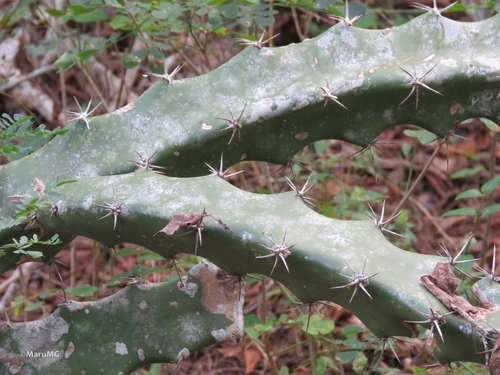
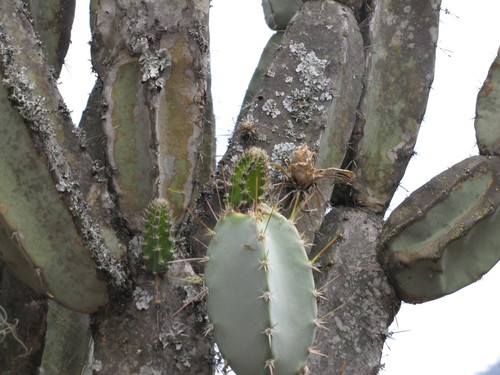
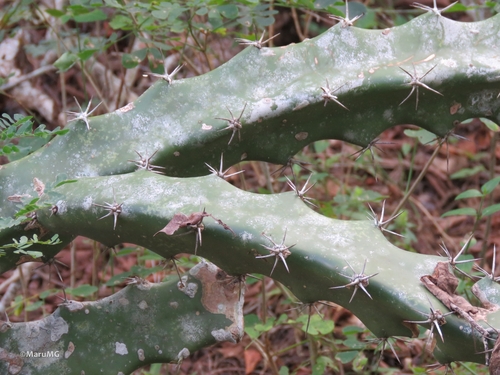
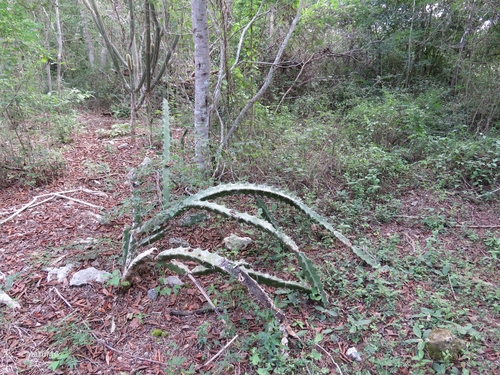
A shrub or small tree. It grows 5 m tall. There are prickles along the stem. The leaves are twice divided and there are 8-18 pairs of pinnae. There are up to 50 pairs of pinnules on each pinnae. The flowers are yellow. They are in large clusters at the ends of branches. The pods are flattened.
Names & Synonyms
Nopal de cruz
References (1)
- Arellanes, Y., et al, 2013, Influence of traditional markets on plant management in the Tehuacan Valley. Journal of Ethnobiology and Ethnomedicine 9:38