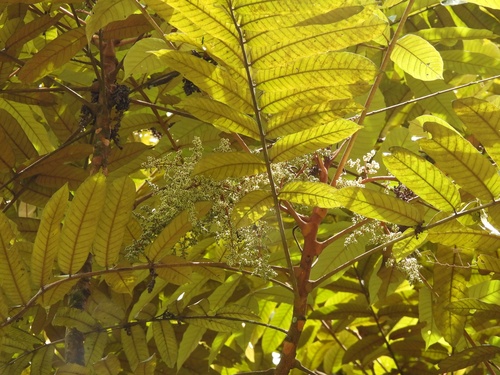
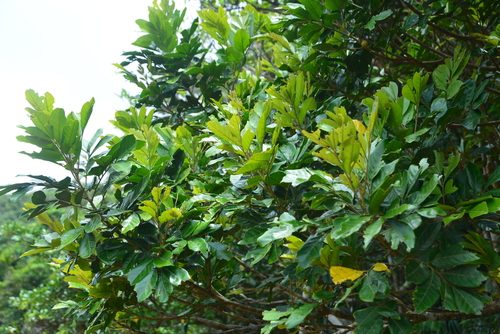
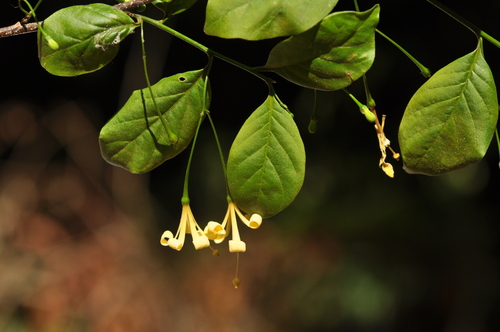
Turraea holstii
Gurke
MeliaceaeFruit
iNaturalist · cc-by-nc
(c) Christian Gilli, some rights reserved (CC BY-NC), uploaded by Christian Gilli
(c) Christian Gilli, some rights reserved (CC BY-NC), uploaded by Christian Gilli

iNaturalist · cc-by-nc
(c) andreaudzungwa, some rights reserved (CC BY-NC)
(c) andreaudzungwa, some rights reserved (CC BY-NC)

iNaturalist · cc-by-nc
(c) andreaudzungwa, some rights reserved (CC BY-NC)
(c) andreaudzungwa, some rights reserved (CC BY-NC)
What to Eat
Edible parts: Fruit
The fruit is eaten.
Where to Find It
It is a tropical plant.
Africa, East Africa, Ethiopia, Kenya,
Countries: Angola, Burkina Faso, Burundi, Benin, Botswana, Congo (DRC), Central African Republic, Congo (Republic), Cote d'Ivoire, Cameroon, Cape Verde, Djibouti, Algeria, Egypt, Eritrea, Ethiopia, Gabon, Ghana, Gambia, Guinea, Equatorial Guinea, Guinea-Bissau, Kenya, Comoros, Liberia, Lesotho, Libya, Morocco, Madagascar, Mali, Mauritania, Mauritius, Malawi, Mozambique, Namibia, Niger, Nigeria, Rwanda, Seychelles, Sudan, Sierra Leone, Senegal, Somalia, South Sudan, Sao Tome & Principe, Eswatini, Chad, Togo, Tunisia, Tanzania, Uganda, South Africa, Zambia, Zimbabwe
How to Identify
A shrub or small tree. It can grow 15 m tall. Young branches are hairy. The leaves are narrowly oval and 8 cm long by 3 cm wide. The flowers are white. There are 2-3 together in the axils of leaves. The fruit is a flattened round shape and 7 mm long by 10-15 mm wide. The seeds are reddish black.
Names & Synonyms
Hirqaqamo, Reteti
Turraea laxiflora C. DC.Turraea usambarensis Gurke
References (4)
- Bussman, R. W., 2006, Ethnobotanyof the Samburu of Mt Nyiru, South Turkana, Kenya. Journal of Ethnobiology and Ethnomedicine. 2:35
- Demise, S. & Asfaw, Z., 2020, Ethno Botanical Study of Wild Edible Plants in Adola District, Southern, Ethiopia. International Journal of Research and Analytical Reviews (IJRAR) 7(2).
- Emire, A., et al, 2021, Ethnobotanical Study of Wild Edible Fruit Tree and Shrub Species in Adola Rede and Odo Shakiso Midland Districts of Guji Zone, Southern Ethiopia. Int. J. Adv. Res. Biol. Sci. (2021). 8(12): 96-109
- Heine, et al, Species encountered and used on Mt Nyiru.