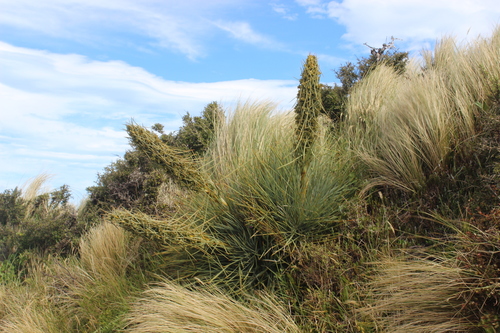
Chaerophyllum tuberosum
Royle
Sham
What to Eat
Edible parts: Root
The root is edible when cooked.
Where to Find It
It is a temperate plant.
Asia, Himalayas,
How to Identify
A biennial with hermaphroditic, insect-pollinated, self-fertile flowers. Tolerates light sandy, medium loamy, and heavy clay soils with mildly acid to basic pH. Grows in semi-shade or full sun, preferring moist soil.
How to Grow
We have very little information on this species and do not know if it will be hardy in Britain, though judging by its native range it could succeed outdoors in many parts of this country. The following notes are based on the general needs of the genus. An easily grown plant, it succeeds in almost any soil, though it prefers a moist soil.
Propagation: The following notes are based on C. bulbosum and may not apply directly to this species. Seed is best sown in autumn directly in situ. Viability is very short, and according to some reports the seed becomes dormant if allowed to dry out, failing to germinate for up to a year. Seed saved for spring sowing should be kept in damp sand in a cold but frost-free place, then sown in situ in March. Alternatively, sow in autumn into a seed tray in a cold frame, then transfer the seed along with its soil and sow the whole lot in situ in early April.
Medicinal Uses
None known.
Other Uses
None known.
Wikipedia
A biennial with hermaphroditic, insect-pollinated, self-fertile flowers. Tolerates light sandy, medium loamy, and heavy clay soils with mildly acid to basic pH. Grows in semi-shade or full sun, preferring moist soil.
References (2)
- Hedrick, U.P., 1919, (Ed.), Sturtevant's edible plants of the world. p 182
- Plants for a Future database, The Field, Penpol, Lostwithiel, Cornwall, PL22 0NG, UK. http://www.scs.leeds.ac.uk/pfaf/