Guioa acuminata
Radlk.
Guioa tree
iNaturalist · cc-by-nc
(c) ndionson, some rights reserved (CC BY-NC), uploaded by ndionson
(c) ndionson, some rights reserved (CC BY-NC), uploaded by ndionson
iNaturalist · cc-by-nc
(c) ndionson, some rights reserved (CC BY-NC)
(c) ndionson, some rights reserved (CC BY-NC)
Where to Find It
It is a tropical plant. It grows in secondary forest.
Asia, Indonesia, Philippines*, SE Asia,
Countries: United Arab Emirates, Afghanistan, Armenia, Azerbaijan, Bangladesh, Bahrain, Brunei, Bhutan, China, Georgia, Indonesia, Israel, India, Iraq, Iran, Jordan, Japan, Kyrgyzstan, Cambodia, North Korea, South Korea, Kuwait, Kazakhstan, Laos, Lebanon, Sri Lanka, Myanmar, Mongolia, Maldives, Malaysia, Nepal, Oman, Philippines, Pakistan, Qatar, Saudi Arabia, Singapore, Syria, Thailand, Tajikistan, Timor-Leste, Turkmenistan, Turkey, Taiwan, Uzbekistan, Vietnam, Yemen
How to Identify
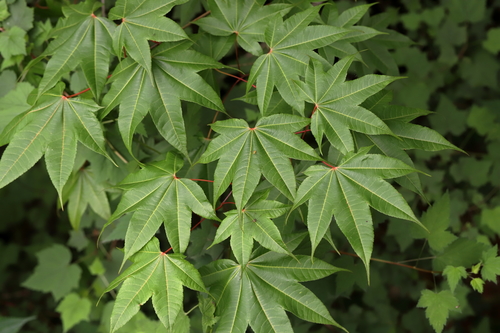
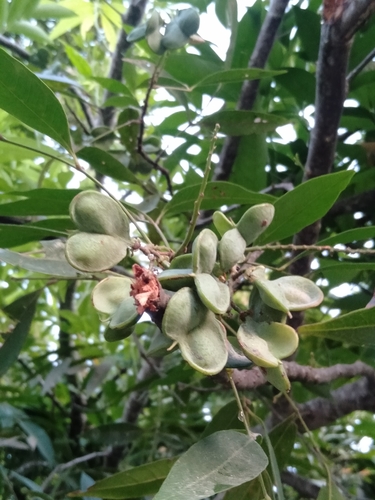
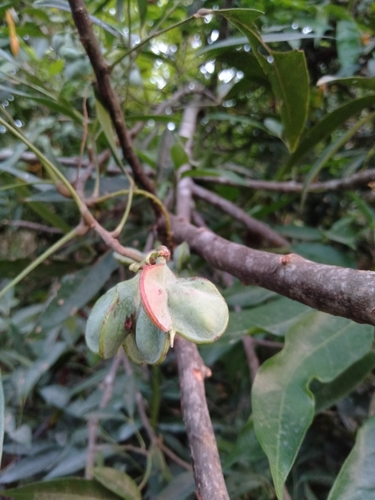
A small tree. The leaves are alternate and compound. The leaflets are narrowly oval and taper to the tip. The flowers are white and in panicles. The fruit is a red capsule. The seeds are dark with a white aril or fleshy layer around them.
How to Grow
Plants can be grown from seeds.
Wikipedia
Source ↗Guioa acuminata is a species of plant in the family Sapindaceae. It is endemic to the Philippines.
Names & Synonyms
Pasi, Pohon guya
References (2)
- Lacuna-Richman, C., 2006, The use of non-wood forest products by migrants in a new settlement: experiences of a Visayan community in Palawan, Philippines. Journal of Ethnobiology and Ethnomedicine. 2:36
- Sukarya, D. G., (Ed.) 2013, 3,500 Plant Species of the Botanic Gardens of Indonesia. LIPI p 312