Cyrtomium fortunei
J. Sm.
Fortune's cyrtomium, Japanese holly fern

(c) ngai wong, some rights reserved (CC BY-NC-ND)
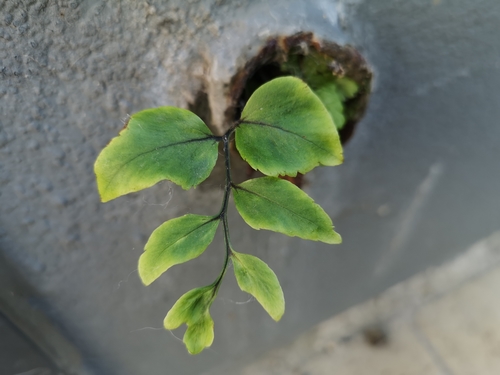
(c) Isa Klee, some rights reserved (CC BY-NC)
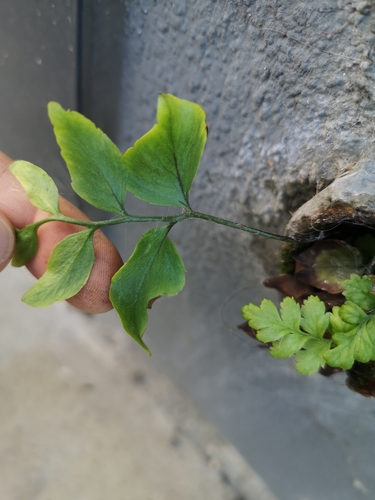
(c) Isa Klee, some rights reserved (CC BY-NC)
What to Eat
Edible parts: Leaves, Fronds
None known.
Known Hazards
Where to Find It
It is a temperate plant. It grows in cracks in limestone in open areas or in forests. In China it grows between 100-2,400 m above sea level. It can grow in light shade.
Asia, China, Himalayas, India, Indochina, Japan, Korea, Nepal, North America, Northeastern India, SE Asia, Slovenia, Taiwan, Thailand, USA, Vietnam,
How to Identify
A tufted fern. It grows 25-50 cm tall. It loses its leaves in colder climates. The fronds are oblong and 20-42 cm long by 8-14 cm wide. It has leaflets along the stalk. These are sickle shaped and dull green.
How to Grow
Requires a moderately loose soil, do not firm the soil any more than is necessary. Tolerates a little direct sun but it grows better in the shade. Grows well in a woodland garden. Prefers a pH between 6 and 7 but this is not critical. Dislikes too much winter moisture. A very ornamental and hardy plant, tolerating temperatures down to about -30°c. Members of this genus are rarely if ever troubled by browsing deer.
Propagation: Sow spores as soon as ripe on the surface of a humus-rich sterilised soil. Keep the compost moist, ideally by placing a plastic bag over the pot. Germination takes 1–3 months at 20°C. Pot on small clumps of plantlets once large enough to handle and keep humid until well established. Do not plant outside until the ferns are at least 2 years old, and then only in a very well sheltered position. Division can be carried out in spring or summer.
Medicinal Uses
The rhizome is analgesic, anthelmintic, antibacterial, anticoagulant, antiviral, depurative, febrifuge, and haemostatic. A decoction is used to treat hookworm, tapeworm, ascariasis, filariasis, acute infectious hepatitis, and various bleeding conditions. The same decoction is also taken as a preventative measure against influenza and measles.
Other Uses
None known.
Wikipedia
Source ↗Cyrtomium fortunei, also known by its common name Fortune's holly-fern, is a species from the genus Cyrtomium. This plant was first described by John Smith. It has gained the Royal Horticultural Society's Award of Garden Merit.
Names & Synonyms
References (2)
- Kang, Y., et al, 2012, Wild food plants and wild edible fungi in two valleys on the Qinling Mountains (Shaanxi, central China) Journal of Ethnobiology and Ethnomedicine; 9:26
- Liu, Y., et al, 2012, Food uses of ferns in China: a review. Acta Societatis Botanicorum Poloniae 84(4): 263-270


