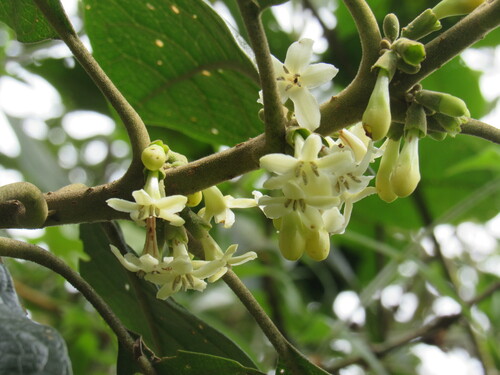
Pogostemon glaber
Benth.

gbif · cc0
Royal Botanic Garden Edinburgh
Royal Botanic Garden Edinburgh

gbif · cc0
GBIF
GBIF

gbif · cc0
GBIF
GBIF
What to Eat
Edible parts: Leaves - spice
The leaves are added to dishes as a spice or flavouring.
Where to Find It
It is a tropical plant. It grows in hills, valleys and forests between 1,300-2,700 m above sea level. In Yunnan.
Asia, Bangladesh, Bhutan, Cambodia, China, Himalayas, India, Indochina, Laos, Myanmar, Nepal, SE Asia, Thailand,
Countries: United Arab Emirates, Afghanistan, Armenia, Azerbaijan, Bangladesh, Bahrain, Brunei, Bhutan, China, Georgia, Indonesia, Israel, India, Iraq, Iran, Jordan, Japan, Kyrgyzstan, Cambodia, North Korea, South Korea, Kuwait, Kazakhstan, Laos, Lebanon, Sri Lanka, Myanmar, Mongolia, Maldives, Malaysia, Nepal, Oman, Philippines, Pakistan, Qatar, Saudi Arabia, Singapore, Syria, Thailand, Tajikistan, Timor-Leste, Turkmenistan, Turkey, Taiwan, Uzbekistan, Vietnam, Yemen
How to Identify
A herb. The stems are 0.5-2 m tall. Lower leaves have leaf stalks 6 cm long but higher leaves do not. The leaves are oval and 5-8 cm long by 3-5 cm wide. There are double teeth along the edge. The flowers are in spikes in the axils of leaves and at the end of the stems and there are many flowers in layers.
Medicinal Uses
The plant is used medicinally.
References (1)
- Ghorbani, A., et al, 2012, A comparison of the wild food plant use knowledge of ethnic minorities in Naban River Watershed Nature Reserve, Yunnan, SW China. Journal of Ethnobiology and Ethnomedicine; 8:17