Ardisia virens
Kurz
Ink berry
PrimulaceaeFruit
iNaturalist · cc-by-nc
(c) 范力中, some rights reserved (CC BY-NC), uploaded by 范力中
(c) 范力中, some rights reserved (CC BY-NC), uploaded by 范力中

iNaturalist · cc-by-nc
(c) JODY HSIEH, some rights reserved (CC BY-NC), uploaded by JODY HSIEH
(c) JODY HSIEH, some rights reserved (CC BY-NC), uploaded by JODY HSIEH

iNaturalist · cc-by-nc
(c) Kinmatsu Lin, some rights reserved (CC BY-NC), uploaded by Kinmatsu Lin
(c) Kinmatsu Lin, some rights reserved (CC BY-NC), uploaded by Kinmatsu Lin
What to Eat
Edible parts: Fruit
The fruit are eaten raw.
Where to Find It
It is a tropical plant. It grows in dark damp places and in humus-rich soils between 300-2,700 m above sea elevel in southern China. It grows in Yunnan in China.
Asia, China, India, Indochina, Indonesia, Myanmar, SE Asia, Taiwan, Thailand, Vietnam,
Countries: United Arab Emirates, Afghanistan, Armenia, Azerbaijan, Bangladesh, Bahrain, Brunei, Bhutan, China, Georgia, Indonesia, Israel, India, Iraq, Iran, Jordan, Japan, Kyrgyzstan, Cambodia, North Korea, South Korea, Kuwait, Kazakhstan, Laos, Lebanon, Sri Lanka, Myanmar, Mongolia, Maldives, Malaysia, Nepal, Oman, Philippines, Pakistan, Qatar, Saudi Arabia, Singapore, Syria, Thailand, Tajikistan, Timor-Leste, Turkmenistan, Turkey, Taiwan, Uzbekistan, Vietnam, Yemen
How to Identify
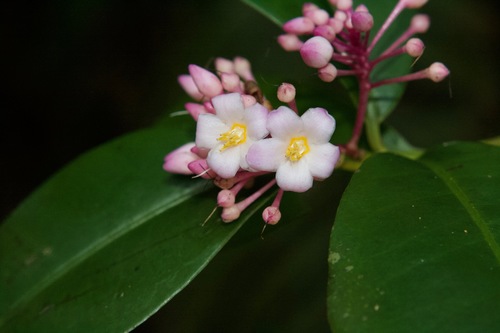
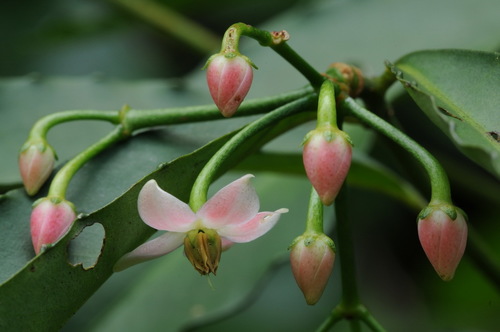
A shrub. It grows 1-3 m tall. The leaves are sword shaped and 9-26 cm long by 3-5 cm wide. The flowers are in groups at the ends of branches. The flowers are papery and white or pink. The fruit are red or blackish and 7-9 mm across.
How to Grow
Plants can be grown from seeds.
Medicinal Uses
The seeds are used in medicine in Indonesia.
Notes
Also put in the family Myrsinaceae.
Names & Synonyms
Comnguoi xanh-tuoi, Lempeni merah ungu
References (2)
- Ghorbani, A., et al, 2012, A comparison of the wild food plant use knowledge of ethnic minorities in Naban River Watershed Nature Reserve, Yunnan, SW China. Journal of Ethnobiology and Ethnomedicine; 8:17
- Sukarya, D. G., (Ed.) 2013, 3,500 Plant Species of the Botanic Gardens of Indonesia. LIPI p 586