Siphocampylus affinis
(Mirb.) McVaugh
CampanulaceaeLeaves

iNaturalist · cc-by-nc
(c) Bodo Nuñez Oberg, some rights reserved (CC BY-NC), uploaded by Bodo Nuñez Oberg
(c) Bodo Nuñez Oberg, some rights reserved (CC BY-NC), uploaded by Bodo Nuñez Oberg
iNaturalist · cc-by-nc
(c) coqwallon, some rights reserved (CC BY-NC)
(c) coqwallon, some rights reserved (CC BY-NC)
What to Eat
Edible parts: Leaves
The leaves are cooked and eaten as a vegetable.
Where to Find It
It is a subtropical and tropical plant. It grows in moist mountain forests. In the Andes it grows between 1,500-3,500 m above sea level.
Asia, Colombia, Ecuador*, India, Northeastern India, South America,
Countries: United Arab Emirates, Afghanistan, Armenia, Argentina, Azerbaijan, Bangladesh, Bahrain, Brunei, Bolivia, Brazil, Bhutan, Chile, China, Colombia, Ecuador, Georgia, French Guiana, Guyana, Indonesia, Israel, India, Iraq, Iran, Jordan, Japan, Kyrgyzstan, Cambodia, North Korea, South Korea, Kuwait, Kazakhstan, Laos, Lebanon, Sri Lanka, Myanmar, Mongolia, Maldives, Malaysia, Nepal, Oman, Peru, Philippines, Pakistan, Paraguay, Qatar, Saudi Arabia, Singapore, Suriname, Syria, Thailand, Tajikistan, Timor-Leste, Turkmenistan, Turkey, Taiwan, Uruguay, Uzbekistan, Venezuela, Vietnam, Yemen
How to Identify
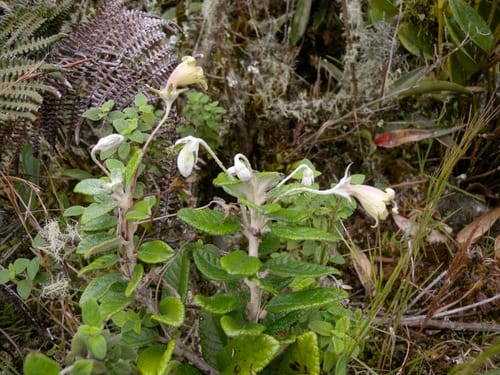
A plant that grows 1-3 m tall. The leaves are near the tips of the branches. The leaves are oval and 2.5-5 cm long by 1-3 cm wide. The flowers are 3.5 cm long and pale yellow.
Wikipedia
Source ↗Siphocampylus affinis is a species of plant in the family Campanulaceae. It is endemic to Ecuador. Its natural habitat is subtropical or tropical moist montane forests. It is threatened by habitat loss.
Names & Synonyms
Nimante
Lobelia affinis Mirb.and others
References (1)
- Srivastava, R. C., 2010, Traditional knowledge of Nyishi (Daffla) tribe of Arunachal Pradesh. Indian Journal of Traditional Knowledge. 9(1):26-37 (As Lobelia affinis)


