Torenia diffusa
D. Don
iNaturalist · cc-by-nc
(c) Rinzin Dorji, some rights reserved (CC BY-NC), uploaded by Rinzin Dorji
(c) Rinzin Dorji, some rights reserved (CC BY-NC), uploaded by Rinzin Dorji
iNaturalist · cc-by-nc
(c) Rinzin Dorji, some rights reserved (CC BY-NC)
(c) Rinzin Dorji, some rights reserved (CC BY-NC)
What to Eat
Edible parts: Leaves - spice
The leaves are used as a spice, traditionally mixed with Impatiens latiflora as a flavoring in curry.
Where to Find It
It is a subtropical plant. In Nepal it grows between 1,400-1,500 m above sea level.
Asia, China, Himalayas, India, Indochina, Nepal, Northeastern India,
Countries: United Arab Emirates, Afghanistan, Armenia, Azerbaijan, Bangladesh, Bahrain, Brunei, Bhutan, China, Georgia, Indonesia, Israel, India, Iraq, Iran, Jordan, Japan, Kyrgyzstan, Cambodia, North Korea, South Korea, Kuwait, Kazakhstan, Laos, Lebanon, Sri Lanka, Myanmar, Mongolia, Maldives, Malaysia, Nepal, Oman, Philippines, Pakistan, Qatar, Saudi Arabia, Singapore, Syria, Thailand, Tajikistan, Timor-Leste, Turkmenistan, Turkey, Taiwan, Uzbekistan, Vietnam, Yemen
How to Identify
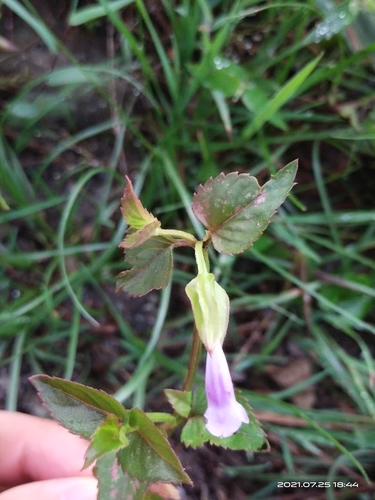
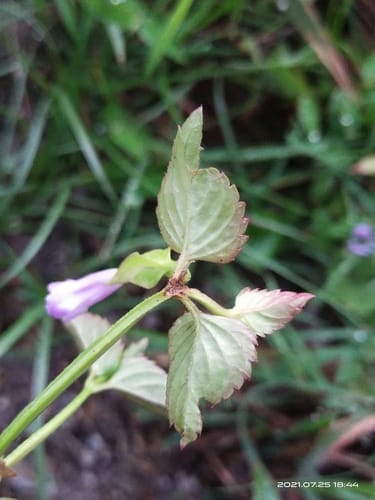
A herb. It forms roots at the nodes. The leaves are oval and 4 cm long. There are teeth towards the top. The flowers are in groups in the axils of leaves or at the end of the plant. The flowers are pale blue with darker spots. The fruit is a narrow capsule. There are many seeds.
Names & Synonyms
Ocheng
Torenia hians Roxb.Torenia vagans Roxb.
References (1)
- Srivastava, R. C., 2010, Traditional knowledge of Nyishi (Daffla) tribe of Arunachal Pradesh. Indian Journal of Traditional Knowledge. 9(1):26-37