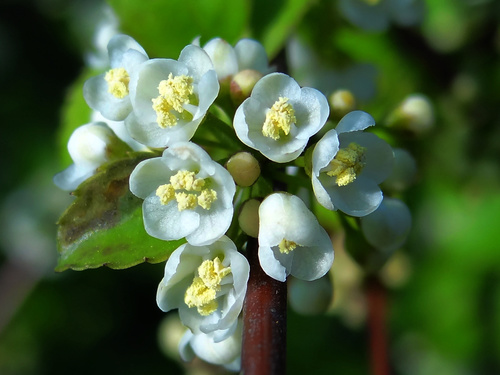
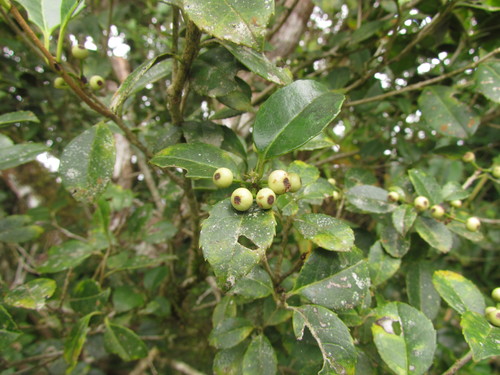
Ilex hookeri
King
AquifoliaceaeFruit
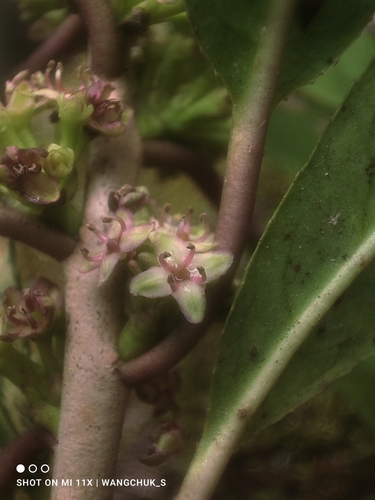
iNaturalist · cc-by-nc
(c) Sangay Wangchuk, some rights reserved (CC BY-NC), uploaded by Sangay Wangchuk
(c) Sangay Wangchuk, some rights reserved (CC BY-NC), uploaded by Sangay Wangchuk
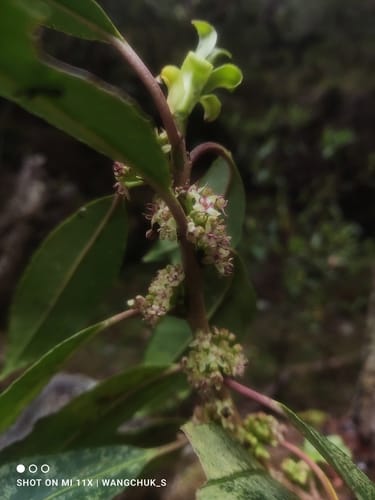
iNaturalist · cc-by-nc
(c) Sangay Wangchuk, some rights reserved (CC BY-NC)
(c) Sangay Wangchuk, some rights reserved (CC BY-NC)
What to Eat
Edible parts: Fruit
The ripe fruit are eaten fresh.
Where to Find It
It is a subtropical plant. In China it grows in broad-leaved forests between 2,100-3,000 m above sea level.
Asia, Bhutan, China, Himalayas, India, Myanmar, Nepal, SE Asia, Tibet,
Countries: United Arab Emirates, Afghanistan, Armenia, Azerbaijan, Bangladesh, Bahrain, Brunei, Bhutan, China, Georgia, Indonesia, Israel, India, Iraq, Iran, Jordan, Japan, Kyrgyzstan, Cambodia, North Korea, South Korea, Kuwait, Kazakhstan, Laos, Lebanon, Sri Lanka, Myanmar, Mongolia, Maldives, Malaysia, Nepal, Oman, Philippines, Pakistan, Qatar, Saudi Arabia, Singapore, Syria, Thailand, Tajikistan, Timor-Leste, Turkmenistan, Turkey, Taiwan, Uzbekistan, Vietnam, Yemen
How to Identify
A evergreen tree. It grows 18 m tall. Leaves are oval and 5-14 cm long by 2-5 cm wide. They are thickly leathery. There are teeth around the edge. Male and female flowers are separate. The fruit are round and 6 mm across.
Names & Synonyms
Lise
Osmanthus dinggyensis P. Y. Pai
References (4)
- Dangol, D. R. et al, 2017, Wild Edible Plants in Nepal. Proceedings of 2nd National Workshop on CUAOGR, 2017.
- Gautam, R. S., et al, 2020, Wild Edible Fruits of Nepal. Int. J. Appl. Sci. Biotechnol. Vol 8(3): 289-304
- Gautam, R. S., et al, 2022, Ethnobotanical Review of Wild Edible Plants of Nepal. Journal of Natural History Museum Volume 32, 2021-22 p 103
- Ghimeray, A. K., Lamsal, K., et al, 2010, Wild edible angiospermic plants of the Illam Hills (Eastern Nepal) and their mode of use by local community. Korean J. Pl. Taxon. 40(1)