Faramea torquata
Mull.Arg.
Torquate faramea
RubiaceaeFruit

iNaturalist · cc-by-nc-sa
(c) Rich Hoyer, some rights reserved (CC BY-NC-SA), uploaded by Rich Hoyer
(c) Rich Hoyer, some rights reserved (CC BY-NC-SA), uploaded by Rich Hoyer
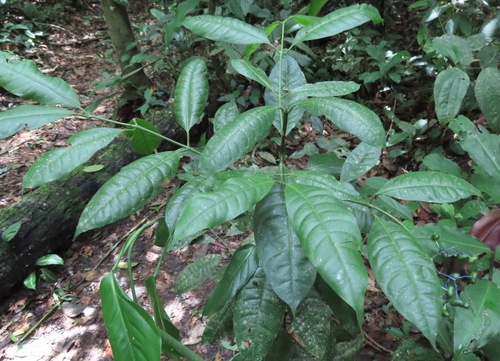
iNaturalist · cc-by-nc-sa
(c) Rich Hoyer, some rights reserved (CC BY-NC-SA)
(c) Rich Hoyer, some rights reserved (CC BY-NC-SA)
What to Eat
Edible parts: Fruit
The fruit is eaten.
Where to Find It
It is a tropical plant. It grows from sea level to 1,000 m above sea level. It grows in the rainforest.
Amazon, Bolivia, Brazil, Colombia, Ecuador, French Guiana, Guyana, Peru, South America, Venezuela,
How to Identify
A tropical shrub or small tree in the Rubiaceae family native to rainforests from sea level to 1,000 m elevation, bearing fruit that ripens from green to dark blue.
Names & Synonyms
Cafecillo, Carrisillo, Coracao-de-negra, Palo de tema, Pata de grulla
Coussarea scalaris Standl.Faramea lehmannii Standl.Faramea pachydictyon Steyerm.Faramea paludicola Steyerm.Faramea rectinervia Standl.
References (5)
- Daly, D. C., An Index of Common Names of Plants in Acre, Brazil. New York Botanical Garden Universidade Federal do Acre. (As Faramea torquata)
- Grandtner, M. M. & Chevrette, J., 2013, Dictionary of Trees, Volume 2: South America: Nomenclature, Taxonomy and Ecology. Academic Press p 249
- Kermath, B. M., et al, 2014, Food Plants in the Americas: A survey of the domesticated, cultivated and wild plants used for Human food in North, Central and South America and the Caribbean. On line draft. p 365 (As Faramea torquata)
- Lopez-Diago, D. & Garcia, N., 2021, Wild edible fruits of Colombia. Biota ColomBiana 22 (2) p 50
- Roa, J. A. G. & Boada, D. S. G., 2018, Fundación para el Fortalecimiento de la Fruticultura y Plantas Alimenticias no Convencionales en Colombia.


