Ilex macrocarpa
Oliv.
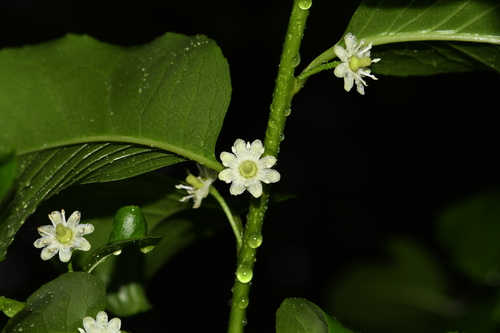
(c) Yao Li, some rights reserved (CC BY-NC), uploaded by Yao Li
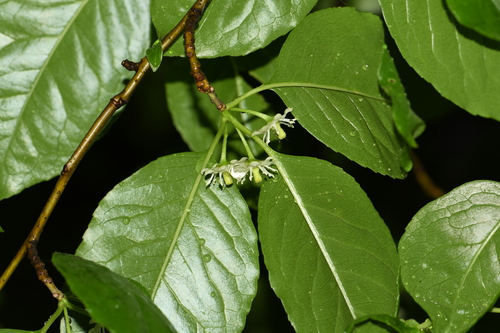
(c) Yao Li, some rights reserved (CC BY-NC), uploaded by Yao Li
What to Eat
Edible parts: Leaves - drink
The leaves are prepared as a drink.
Where to Find It
It is a subtropical plant. In China it grows in forests and mountain valleys between 400-4,500 m above sea level. In Sichuan and Yunnan.
Asia, China, Indochina, SE Asia, Vietnam,
How to Identify
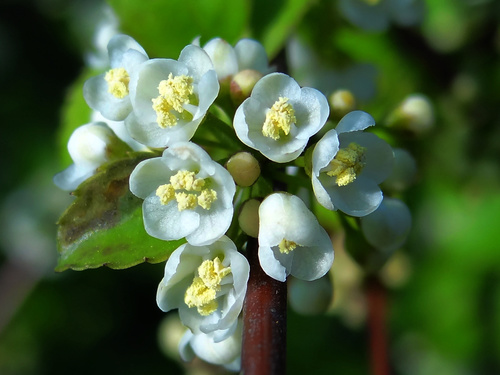
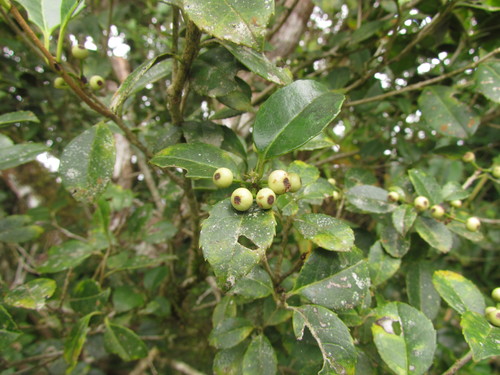
A tree. It grows 5-10 m tall. It loses its leaves during the year. The leaves are oval and 4-13 cm long by 4-6 cm wide. There are sharp teeth along the edge. Male and female flowers are separate.
Wikipedia
Source ↗Ilex macrocarpa is a species of flowering plant in the holly family Aquifoliaceae, native to central and southern China, and Vietnam. A deciduous tree typically 5 to 10 m (16 to 33 ft) tall, it is found in a wide variety of temperate habitats, including roadsides, from 400 to 4,500 m (1,300 to 14,800 ft) above sea level. It differs from other hollies by its large black fruit. It is used as a street tree in Hefei, China.
Names & Synonyms
Bui qua to
References (1)
- Van Sam, H. et al, 2008, Uses and Conservation of Plant Species in a National Park. A case study of Ben En, Vietnam. Economic Botany 62:574-593