Cephalanthus tetrandrus
(Roxb.) Risdale
RubiaceaeFruit

iNaturalist · cc-by-nc
(c) 長鬃山羊, some rights reserved (CC BY-NC)
(c) 長鬃山羊, some rights reserved (CC BY-NC)
iNaturalist · cc-by-nc
(c) 長鬃山羊, some rights reserved (CC BY-NC)
(c) 長鬃山羊, some rights reserved (CC BY-NC)
iNaturalist · cc-by-nc
(c) lienhui, some rights reserved (CC BY-NC)
(c) lienhui, some rights reserved (CC BY-NC)
What to Eat
Edible parts: Fruit
The fruit is eaten.
Where to Find It
It is a subtropical plant. It grows in shady sites and along streams from sea level to 700 m above sea level in southern China. In Yunnan.
Asia, Bangladesh, China, India, Indochina, Laos, Myanmar, Northeastern India, SE Asia, Taiwan, Thailand, Vietnam,
Countries: United Arab Emirates, Afghanistan, Armenia, Azerbaijan, Bangladesh, Bahrain, Brunei, Bhutan, China, Georgia, Indonesia, Israel, India, Iraq, Iran, Jordan, Japan, Kyrgyzstan, Cambodia, North Korea, South Korea, Kuwait, Kazakhstan, Laos, Lebanon, Sri Lanka, Myanmar, Mongolia, Maldives, Malaysia, Nepal, Oman, Philippines, Pakistan, Qatar, Saudi Arabia, Singapore, Syria, Thailand, Tajikistan, Timor-Leste, Turkmenistan, Turkey, Taiwan, Uzbekistan, Vietnam, Yemen
How to Identify
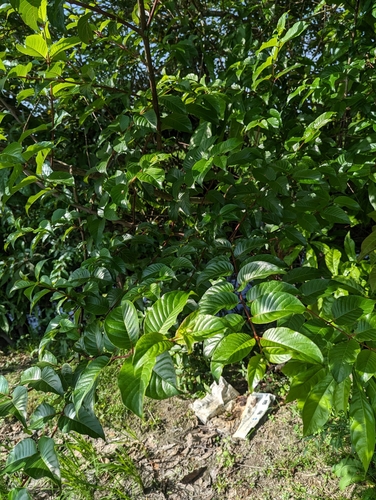
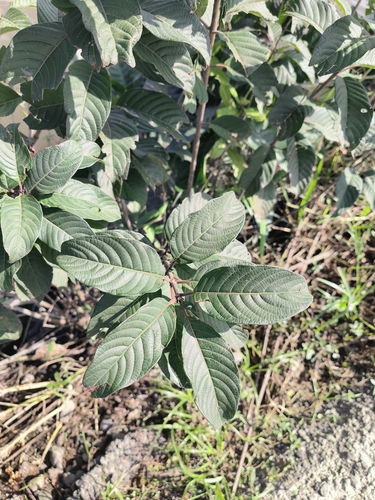
A shrub or small tree. It loses its leaves during the year. It grows 1-5 m tall. The leaves are opposite or in rings or 3-5. They are narrowly oval and 6-15 cm long by 3-6 cm wide. They can be hairy underneath. The flowers are in heads of 1-10. They have tubes that are hairy inside then spoon shaped lobes. The fruiting head is 1-2 cm across.
Names & Synonyms
Cephalanthus glabrifolius HayataCephalanthus monas Lour. ex B. A. GomesCephalanthus naucleoides DC.
Cephalanthus ratoensis HayataNauclea tetrandra Roxb.
References (1)
- Singh, V. B., et al, (Ed.) Horticulture for Sustainable Income and Environmental Protection. Vol. 1 p 215


