Pipturus albidus
A. Gray ex H. Mann

(c) David Eickhoff, some rights reserved (CC BY)
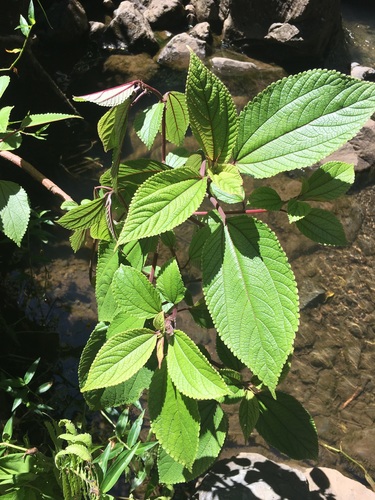
(c) Damon Tighe, some rights reserved (CC BY-NC), uploaded by Damon Tighe
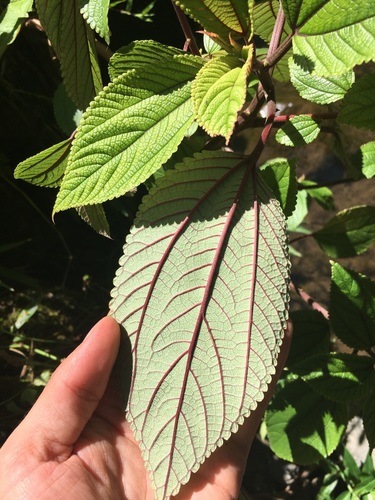
(c) Damon Tighe, some rights reserved (CC BY-NC), uploaded by Damon Tighe
What to Eat
Edible parts: Leaves - tea, Fruit
White fruits resembling small raspberries are produced along the branches. These are edible but bland to subtly sweet. The leaves are used to make a mild but invigorating and healthy tea.
Where to Find It
It is a tropical plant. It grows in wet forest from sea level to 1,870 m above sea level. It needs a moist, well-drained soil.
Hawaii, Pacific, USA,
How to Identify
An evergreen shrub or small tree. It grows 3-10 m tall. Male and female flowers are separate but usually on the same plant. The fruit are white and like raspberries.
How to Grow
Plants are grown from seeds. The seeds are removed from the pulp by putting them into a plastic bag to soften. They can be washed in water and viable seeds sink. Plants can be grown from cuttings 10-15 cm long.
Propagation: Seed - sow in a fine, moist, well-compacted potting medium. The tiny seeds need to be removed from the fruit pulp before planting. Ripen the fruit in a plastic bag to soften the pulp then the seeds can be removed from the pulp more easily. This can be done by rubbing the fruits in a strainer under running water, or by manually crushing the fruits in a bowl of water to separate the seeds from the pulp. The viable seeds will sink and the fruit pulp and other debris can be poured off. Rinse the seeds a few times and pour a mixture of water and seeds on the surface of moist, fine textured, well-compacted medium. Keep the containers in a partially shady location and keep the medium moist. The seeds should begin to germinate in 2 - 3 weeks. Cuttings, 10 - 15cm long. Easy according to some reports, difficult according to others.
Medicinal Uses
Native Hawaiians made a treatment for illnesses known as ʻea and pāʻaoʻao from the fruit. They also combined fresh māmaki leaves with hot stones and spring water to produce herbal tea that was an effective treatment for general debility. Tea made from the leaves of this plant have antiviral properties, antibacterial properties, and antioxidants such as catechins, chlorogenic acid, and rutin It also contains anticancer and chemopreventive properties. Today, packages of dried māmaki leaves are commercially produced. The bast fibres were used by Native Hawaiians to make kapa (bark cloth) and kaula (rope).
Other Uses
The inner bark fibres are used in making kapa cloth. The sap was also sometimes used in a wetting solution during the kapa-making process. Kapa was made by removing a section of the bark and then beating it thinner and thinner with a wooden mallet on a flat surface until eventually a fine cloth used for clothing was produced. The long strong fibres were used for rope and cordage. The wood has been used to make clubs and kapa beaters.
Wikipedia
Source ↗Pipturus albidus, known as māmaki (sometimes waimea, for its resemblance to olomea) in Hawaiian and known as Waimea pipturus in English, is a species of flowering plant in the nettle family, Urticaceae, that is endemic to Hawaiʻi. It inhabits coastal mesic, mixed mesic, and wet forests at elevations of 60–1,830 m (200–6,000 ft). Māmaki is a small tree that reaches a height of 9 m (30 ft) and a trunk diameter of 0.3 m (0.98 ft).
Production
Plants flower and fruit throughout the year. Plants can commence producing fruit when 2 years old.
References (1)
- Fern, K., 2012, Tropical Species Database http://theferns.info/tropical/


