Protium icicariba
(DC.) Marchand
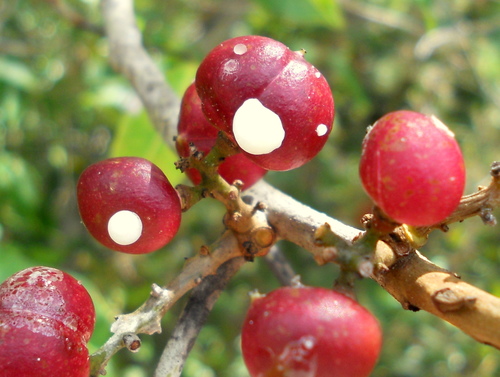
(c) Lucas C. Marinho, some rights reserved (CC BY-NC), uploaded by Lucas C. Marinho

(c) claudiameyer, some rights reserved (CC BY-NC)

(c) Vitor C. Dias Gonçalves, some rights reserved (CC BY-NC)
What to Eat
Edible parts: Fruit, Seeds, Seeds - oil
Fruit - raw. Very aromatic, containing more than 10% sugars. The seed can be used as a substitute for olives. The seeds contain more than 25% oil of an edible oil. A clear oil, it has a nice flavour.
Where to Find It
It is a tropical plant.
Brazil, Colombia, Paraguay, South America, Venezuela,
How to Identify
A tropical shrub in the Burseraceae family with stout branches and compound leaves 15-21 cm long. The fruit and seeds are edible.
How to Grow
Most, if not all, species in this genus are dioecious, both male and female forms need to be grown if fruit and seed are required.
Medicinal Uses
The root bark is astringent, depurative and antisyphilitic. The leaves and the bark are used in the treatment of skin problems, including those caused by the parasitic worm filaria or the flea chigoe. A soft resin obtained from the tree is antirheumatic, haemostatic and stimulant. It is used to soothe a toothache. When mixed with the pigment from Bixa orellana, it forms an ointment that is useful as a preventative measure against skin inflammation in woodworkers caused by irritant timbers.
Other Uses
A good quality resin is obtained from the stems. This species is said to produce the best resin in the genus, known as 'elemi du Brasil'. The resin contains 12.5% essential oil. The reddish-white wood is used in general construction, general carpentry, cabinet making etc. We have no more information on the wood of this species, but a general description of the wood for tropical American members of this genus is as follows:- The heartwood is brown or reddish-brown, sometimes with irregularly spaced darker brown lines; it is not always sharply demarcated from the pale buff to pinkish sapwood. The texture varies from rather fine to fairly coarse; grain straight to very irregular and interlocked; lustre is rather high; dry specimens are without any distinctive odour or taste. Silica is reported for some species. The wood is generally reported to have a low resistance to attack by decay fungi and is vulnerable to dry-wood termites; it has no appreciable resistance to marine borers. Reports on seasoning vary from fairly easy to air dry to moderately difficult. Logs should be debarked prior to sawing to avoid resin accumulation on cutters and equipment. The dry wood works easily and rates fair to good in all operations; it cuts easily into veneers but tends to buckle on drying; some species are abrasive because of the silica content. The wood is used for purposes such as furniture, millwork, veneer and plywood, general construction, particleboard; it is a possible substitute for birch.
Wikipedia
Source ↗Protium icicariba, the Brazilian elemi, is a species of flowering plant in the family Burseraceae. It is native to Venezuela and eastern Brazil. A tree, it is typically found in the wet tropics, and has edible, aromatic fruit.
Names & Synonyms
Almecegueira, Breu jauaricica, Icicariba
References (1)
- Fern, K., 2012, Tropical Species Database http://theferns.info/tropical/


