Scolopia chinensis
(Lour.) Clos
Chinese scolopia tree
SalicaceaeFruit
iNaturalist · cc-by-nc
(c) biobank-lantauhk, some rights reserved (CC BY-NC), uploaded by biobank-lantauhk
(c) biobank-lantauhk, some rights reserved (CC BY-NC), uploaded by biobank-lantauhk
iNaturalist · cc-by-nc
(c) 李成華, some rights reserved (CC BY-NC)
(c) 李成華, some rights reserved (CC BY-NC)
What to Eat
Edible parts: Fruit
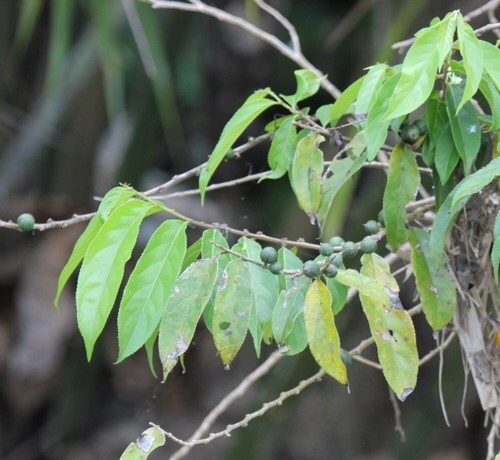
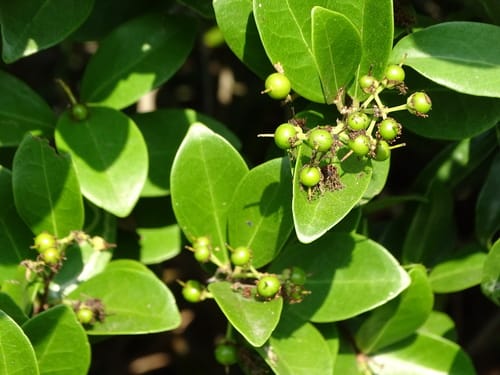
Fruit - raw. The brownish red, dark purple, or black, orbicular-globose berries are 5 - 10mm in diameter.
Where to Find It
It is a tropical plant. It grows in open forests at low elevations. It grows between 50-400 m above sea level.
Asia, China, India, Indochina, Indonesia, Laos, Malaysia, SE Asia, Sri Lanka, Thailand, Vietnam,
Countries: United Arab Emirates, Afghanistan, Armenia, Azerbaijan, Bangladesh, Bahrain, Brunei, Bhutan, China, Georgia, Indonesia, Israel, India, Iraq, Iran, Jordan, Japan, Kyrgyzstan, Cambodia, North Korea, South Korea, Kuwait, Kazakhstan, Laos, Lebanon, Sri Lanka, Myanmar, Mongolia, Maldives, Malaysia, Nepal, Oman, Philippines, Pakistan, Qatar, Saudi Arabia, Singapore, Syria, Thailand, Tajikistan, Timor-Leste, Turkmenistan, Turkey, Taiwan, Uzbekistan, Vietnam, Yemen
How to Identify
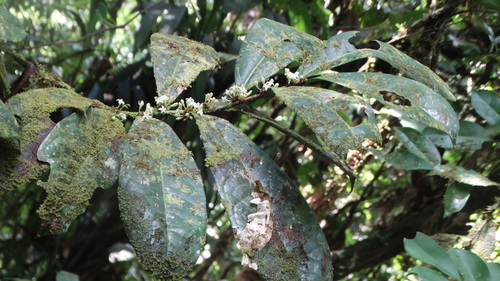
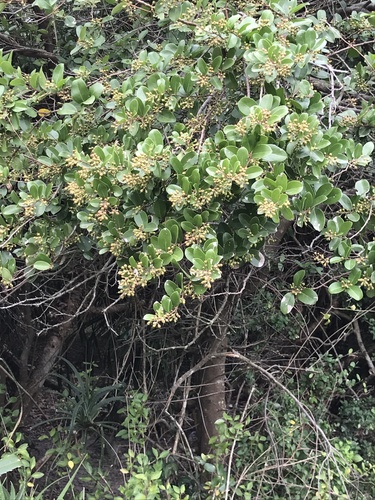
An evergreen shrub or small tree. It grows 2-6 m tall. The small branches can often have spines. The leaves are oblong and 4-7 cm long by 2-4 cm wide. The flowers are yellowish. The fruit are brown to red or dark purple. They are round and 5-10 mm across. There are 4-6 seeds.
How to Grow
Plants can be grown from seeds.
Names & Synonyms
Bom trungquoc, Pohon skolopia cina
Phoberos chinensis Lour.Phoberos cochinchinensis Lour.Scolopia siamensis Warb.
References (4)
- Fern, K., 2012, Tropical Species Database http://theferns.info/tropical/
- Flora of China Vol. 13
- Sukarya, D. G., (Ed.) 2013, 3,500 Plant Species of the Botanic Gardens of Indonesia. LIPI p 501
- World Checklist of Useful Plant Species 2020. Royal Botanic Gardens, Kew