Eurya nitida
Korth.
PentaphylacaceaeLeaves
iNaturalist · cc-by-nc-nd
(c) Sunnetchan, some rights reserved (CC BY-NC-ND), uploaded by Sunnetchan
(c) Sunnetchan, some rights reserved (CC BY-NC-ND), uploaded by Sunnetchan
iNaturalist · cc-by-nc
(c) Stargazer, some rights reserved (CC BY-NC)
(c) Stargazer, some rights reserved (CC BY-NC)

iNaturalist · cc-by-nc
(c) Stargazer, some rights reserved (CC BY-NC)
(c) Stargazer, some rights reserved (CC BY-NC)
What to Eat
Edible parts: Leaves
The leaves are eaten.
Where to Find It
It is a subtropical plant. It grows in forests and thickets between 500-1,500 m above sea level. In Sichuan and Yunnan.
Asia, Cambodia, China, India, Indochina, Indonesia, Laos, Malaysia, Myanmar, Philippines, SE Asia, Sri Lanka, Taiwan, Thailand, Vietnam,
Countries: United Arab Emirates, Afghanistan, Armenia, Azerbaijan, Bangladesh, Bahrain, Brunei, Bhutan, China, Georgia, Indonesia, Israel, India, Iraq, Iran, Jordan, Japan, Kyrgyzstan, Cambodia, North Korea, South Korea, Kuwait, Kazakhstan, Laos, Lebanon, Sri Lanka, Myanmar, Mongolia, Maldives, Malaysia, Nepal, Oman, Philippines, Pakistan, Qatar, Saudi Arabia, Singapore, Syria, Thailand, Tajikistan, Timor-Leste, Turkmenistan, Turkey, Taiwan, Uzbekistan, Vietnam, Yemen
How to Identify
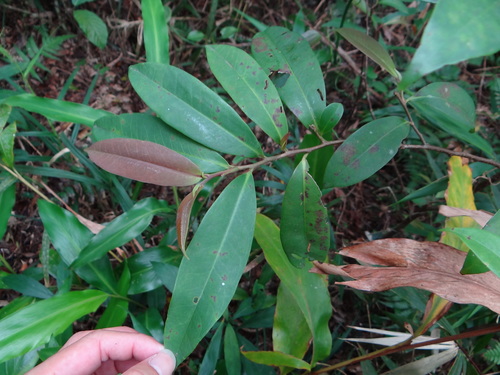
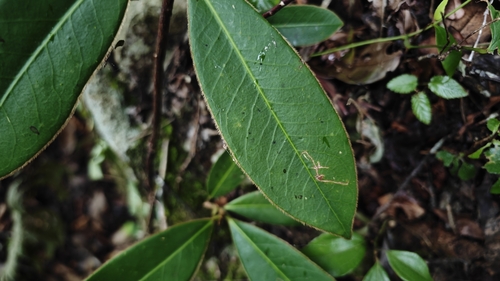
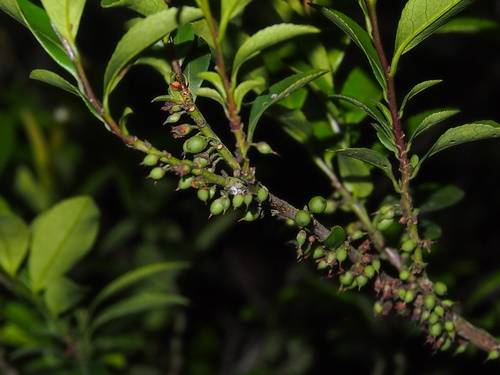
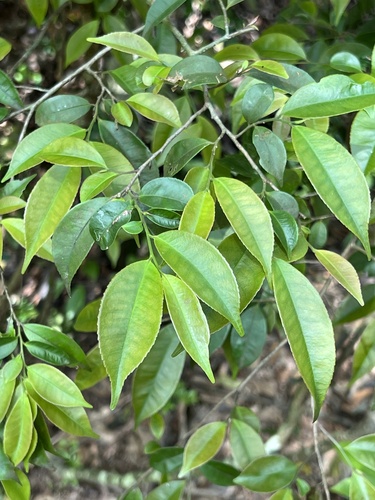
A shrub or small tree. It grows 2-5 m tall. The leaves are oblong and 4-6 cm long by 2-3 cm wide. The leaves are pale green underneath. The flowers occur singly or in groups of up to 4 in the axils of leaves. Male and female flowers are separate. The fruit are bluish black when mature and 3-4 mm across.
Notes
Also put in the family Theaceae.
Names & Synonyms
Many
References (2)
- http://Satoyama-initiative.org/en/community-forestry-in-thailand/
- Use of Native Plants in the Pala River Basin North Thailand. Eco Thai German Farm