Cissus obovata
Vahl
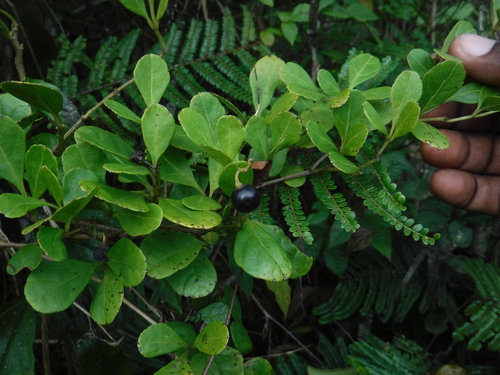
(c) Martin Reith, some rights reserved (CC BY-NC), uploaded by Martin Reith

(c) Steve Maldonado Silvestrini, some rights reserved (CC BY-NC)
What to Eat
Edible parts: Fruit
The ripe fruit are eaten.
Where to Find It
It is a tropical plant.
Asia, Dominican Republic, Hispaniola, India, Lesser Antilles, Northeastern India, Puerto Rico, West Indies,
How to Identify
A slightly woody vine. It climbs by means of tendrils and grows 3-15 m long. The stems are branched and angular and fleshy. They are 3-8 mm across. They are flexible and swollen at the nodes. The leaves are alternate and have 3 leaflets. The leaflets are oval and 1-6 cm long by 1-4 cm wide. The leaflets are unequal in the side leaflets. The flowering shoots are opposite the leaves. The flowers are reddish. The fruit are round and 4-5 mm across. They are black or purple when ripe. There is one seed 5 mm long.
Production
The plants flower in June and fruit in July.
Names & Synonyms
Puar-peng
References (1)
- Kar, A., et al, 2013, Wild Edible Plant Resources used by the Mizos of Mizoram, India. Kathmandu University Journal of Science, Engineering and Technology. Vol. 9, No. 1, July, 2013, 106-126 (As Cissus obovata Lawson)


