Ribes lobbii
A. Gray
Gummy gooseberry
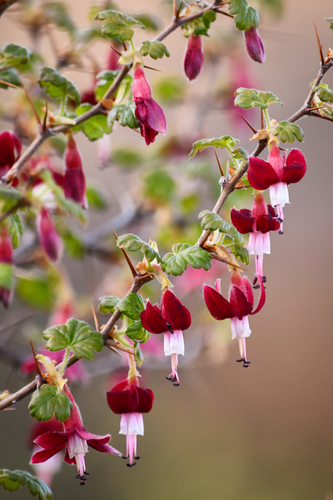
(c) brantastic, some rights reserved (CC BY-NC)

(c) Liam Ragan, some rights reserved (CC BY-NC)

(c) Liam Ragan, some rights reserved (CC BY-NC)
What to Eat
Edible parts: Fruit
The fruit can be eaten raw or cooked, though it is generally considered unpalatable. It was occasionally eaten by some native North American Indian tribes.
How to Identify
A shrub. It grows 1 m tall and can be spreading. It is finely hairy with spines at the nodes. The fruit are reddish-brown and 10-15 mm across.
How to Grow
Easily grown in a moisture retentive but well-drained loamy soil of at least moderate quality. Requires a sunny position. Hardy to about -20°c. A very ornamental plant, it is closely related to R. menziesii. Plants can harbour a stage of 'white pine blister rust', so they should not be grown in the vicinity of pine trees. Plants in this genus are notably susceptible to honey fungus.
Propagation: Seed is best sown as soon as it is ripe in autumn in a cold frame. Stored seed requires 3 months of cold stratification at 0–5°C and should be sown as early in the year as possible. Under normal storage conditions, seed can remain viable for 17 years or more. Prick out seedlings into individual pots when large enough to handle, grow on in a cold frame for their first winter, then plant out in late spring the following year. Take cuttings of half-ripe wood, 10–15cm with a heel, in July/August in a frame. Cuttings of mature wood of the current year's growth, preferably with a heel of the previous year's growth, can be taken November to February in a cold frame or sheltered bed outdoors.
Medicinal Uses
The root has been used to treat diarrhoea. A poultice made from the roots and salt water has been applied to mouth sores, body sores, blisters, and carbuncles. Root ash mixed with oil has been used as a salve on boils.
Other Uses
The roots have been boiled together with cedar (Juniperus spp., Thuja sp.) and wild rose (Rosa spp.) roots, then pounded and woven into rope. The plant's sharp thorns have been used as probes for boils, for removing splinters, and for tattooing.
Wikipedia
Source ↗Ribes lobbii (known commonly by the names gummy gooseberry, fuchsia-flowered gooseberry or pioneer gooseberry) is a shrubby, perennial dicot found on the western coast of North America.
Names & Synonyms
References (2)
- PFAF
- Segura, S., et al, 2018, The edible fruit species in Mexico. Genet Resour Crop Evol (2018) 65:1767–1793
More from Grossulariaceae


