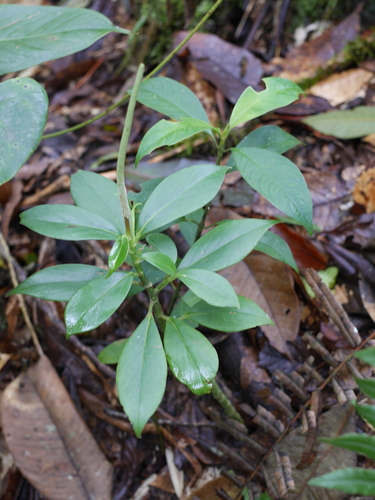
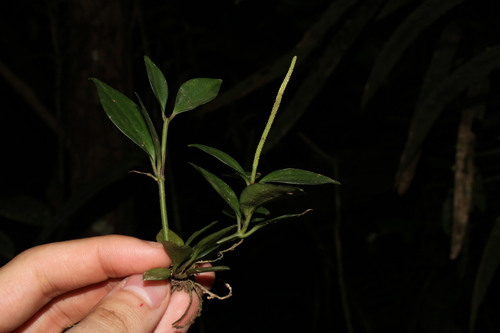
Piper macropiper
Pennant
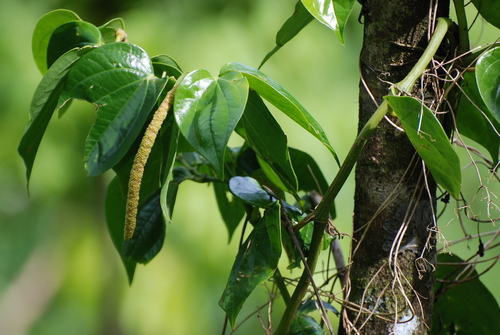
(c) tavita_togia2016, some rights reserved (CC BY-NC), uploaded by tavita_togia2016
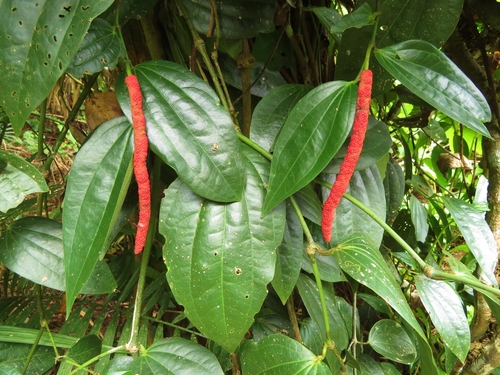
(c) Graham Bell, some rights reserved (CC BY-NC), uploaded by Graham Bell
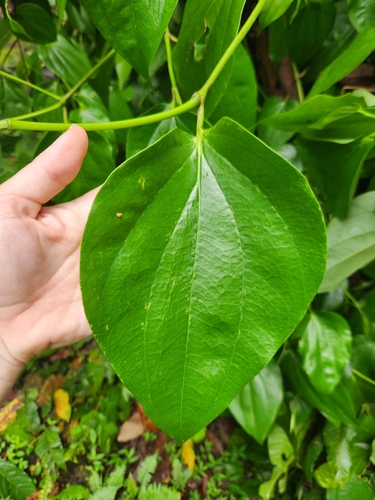
(c) Shelomi Doyle, some rights reserved (CC BY), uploaded by Shelomi Doyle
What to Eat
Edible parts: Leaves, Fruit
The fruit and leaves are chewed with betel nut.
Where to Find It
It is a tropical plant. It grows up to 800 m above sea level in Australia.
Asia, Australia, Caroline Islands, Indonesia, Malaysia, Papua New Guinea, PNG, Philippines, Samoa, SE Asia, Solomon Islands, Taiwan, Tonga, Vanuatu, Wallis and Futuna, West Papua,
How to Identify
A vine. The stems can be 8 cm across. The leaves are 8-20 cm long by 4-10 cm wide. The fruiting shoots are 9-13 cm long.
Medicinal Uses
Kawakawa was used as a traditional medicinal plant of the Māori. An infusion made from the leaves or roots was used or its leaves were chewed to relieve toothache, and wounds were often bound in kawakawa leaves. The sweet edible yellow berries (most often found in summer on female trees) of the plant were eaten as a diuretic. Traditionally, leaves with holes that had been eaten by caterpillars were considered the best to use. In cultural contexts, host people of a marae wave leaves of kawakawa to welcome guests. Kawakawa are associated with death, and at a tangi, both hosts and guests may wear wreaths of kawakawa on the head as a sign of mourning. Early European settlers to New Zealand used kawakawa in teas, and experimented using it as a flavouring agent in beer. It is commonly grown as an ornamental plant in gardens. Kawakawa essential oil contains myristicin, a deliriant when consumed in high concentrations.
Names & Synonyms
References (3)
- Henning, B. M., 2014, The Diversity of Conservation: Exploring Narratives, Relationships and Ecosystem Services in Melanesian Market-based Biodiversity Conservation. Ph D dissertation, Uni of Minnesota. p 210
- Milliken, W., 2000, Ethnobotany of the Yali of West Papua. Royal Botanical Garden, Edinburgh. p 10 (near Baliem)
- World Checklist of Useful Plant Species 2020. Royal Botanic Gardens, Kew