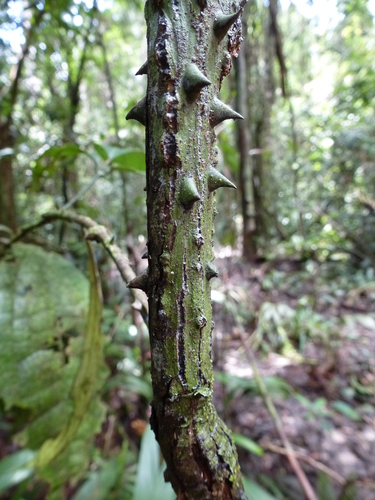
Strychnos cathayensis
Merr.

iNaturalist · cc-by-nc
(c) JODY HSIEH, some rights reserved (CC BY-NC)
(c) JODY HSIEH, some rights reserved (CC BY-NC)

iNaturalist · cc-by-nc
(c) JODY HSIEH, some rights reserved (CC BY-NC)
(c) JODY HSIEH, some rights reserved (CC BY-NC)

iNaturalist · cc-by-nc
(c) JODY HSIEH, some rights reserved (CC BY-NC)
(c) JODY HSIEH, some rights reserved (CC BY-NC)
What to Eat
Edible parts: Fruit
The berries are eaten fresh.
Known Hazards
Where to Find It
It is a tropical plant. In southern China is grows between 300-800 m above sea level.
Asia, China, SE Asia, Taiwan, Vietnam,
Countries: United Arab Emirates, Afghanistan, Armenia, Azerbaijan, Bangladesh, Bahrain, Brunei, Bhutan, China, Georgia, Indonesia, Israel, India, Iraq, Iran, Jordan, Japan, Kyrgyzstan, Cambodia, North Korea, South Korea, Kuwait, Kazakhstan, Laos, Lebanon, Sri Lanka, Myanmar, Mongolia, Maldives, Malaysia, Nepal, Oman, Philippines, Pakistan, Qatar, Saudi Arabia, Singapore, Syria, Thailand, Tajikistan, Timor-Leste, Turkmenistan, Turkey, Taiwan, Uzbekistan, Vietnam, Yemen
How to Identify
A woody creeper. It grows 8 m long. The young branches are hairy and have tendrils or spines. The leaves are 2-10 cm long by 1-4 cm wide. They are hairy underneath. There are many flowers in a group. The fruit are berries 2-3 cm across. They have 2-7 seeds.
Medicinal Uses
The roots and the seeds are used medicinally.
Names & Synonyms
Strychnos cathayensis var. cathayensisStrychnos henryi Merr. & Yamam.
References (1)
- Reis, S. V. and Lipp, F. L., 1982, New Plant Sources for Drugs and Foods from the New York Botanical Garden herbarium. Harvard. p 240