Acantholippia seriphioides
(A. Gray) Moldenke
Andean thyme
VerbenaceaeLeaves
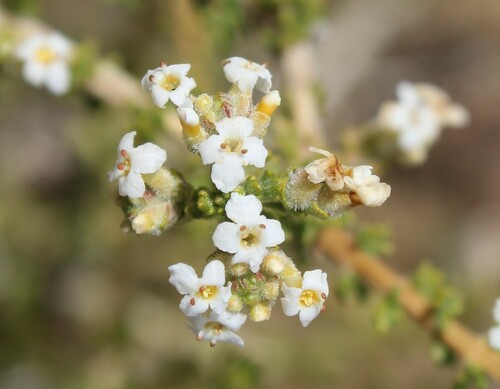
iNaturalist · cc-by-nc
(c) nicochimento, some rights reserved (CC BY-NC)
(c) nicochimento, some rights reserved (CC BY-NC)
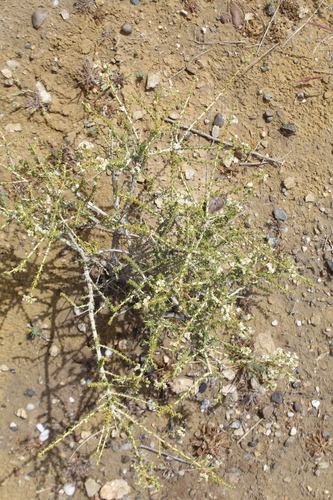
iNaturalist · cc-by-nc
(c) nicochimento, some rights reserved (CC BY-NC)
(c) nicochimento, some rights reserved (CC BY-NC)
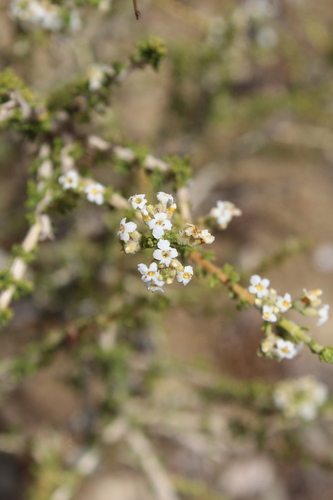
iNaturalist · cc-by-nc
(c) nicochimento, some rights reserved (CC BY-NC)
(c) nicochimento, some rights reserved (CC BY-NC)
What to Eat
Edible parts: Leaves - flavouring
The leaves are used as a flavouring and are commonly used in Argentina.
Where to Find It
It is a temperate plant. It grows in arid stony soil.
Argentina, South America,
How to Identify
A shrub or small tree. It grows 5 m tall. There are prickles along the stem. The leaves are twice divided and there are 8-18 pairs of pinnae. There are up to 50 pairs of pinnules on each pinnae. The flowers are yellow. They are in large clusters at the ends of branches. The pods are flattened.
Other Information
It is commonly used in Argentina.
Names & Synonyms
Nacunan, Tomillo del monte, Tomillo silvestre
Lippia foliolosa Phil.Lippia rubiginosa Gillies ex BallLippia seriphioides A. Gray
References (2)
- Ladio, A. H. and Lozada, M., 2004, Patterns of use and knowledge of wild edible plants in distinct ecological environments: a case study of a Mapuche community from northwestern Patagonia. Biodiversity and Conservation 13:1153-1173
- Reis, S. V. and Lipp, F. L., 1982, New Plant Sources for Drugs and Foods from the New York Botanical Garden herbarium. Harvard. p 249


