Drynaria drynarioides
(Hook.) Christenh.
PolypodiaceaeLeaves

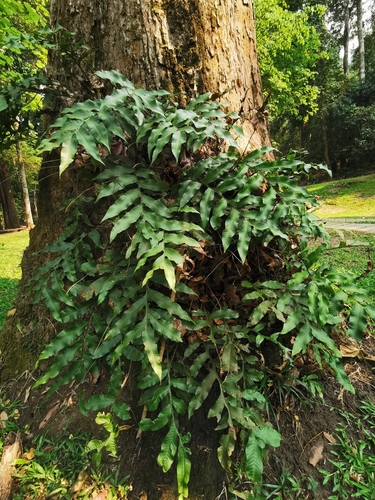
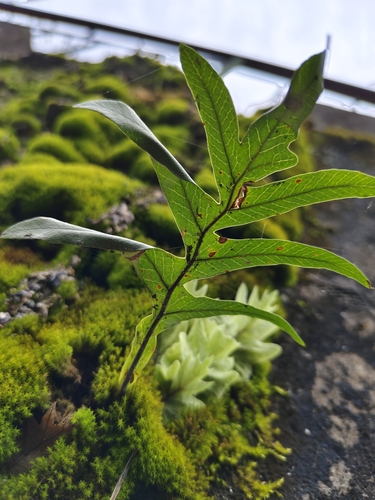
iNaturalist · cc-by
(c) Cheongweei Gan, some rights reserved (CC BY), uploaded by Cheongweei Gan
(c) Cheongweei Gan, some rights reserved (CC BY), uploaded by Cheongweei Gan

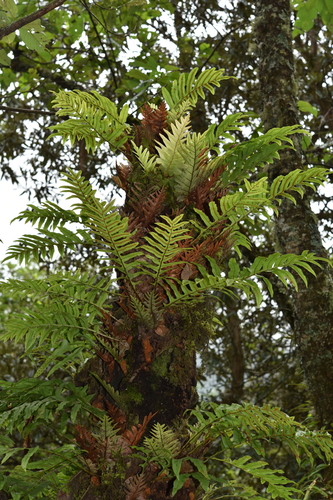
iNaturalist · cc-by-nc
(c) KOFANG, some rights reserved (CC BY-NC)
(c) KOFANG, some rights reserved (CC BY-NC)
What to Eat
Edible parts: Fronds, Leaves
The fronds and leaves are eaten.
Where to Find It
It is a tropical plant. It grows in evergreen forest.
Asia, Cambodia, Fiji, Indochina, Indonesia, Laos, Pacific, Papua New Guinea, PNG, SE Asia, Solomon Islands, Thailand,
Countries: United Arab Emirates, Afghanistan, Armenia, Australia, Azerbaijan, Bangladesh, Bahrain, Brunei, Bhutan, China, Fiji, Micronesia, Georgia, Indonesia, Israel, India, Iraq, Iran, Jordan, Japan, Kyrgyzstan, Cambodia, Kiribati, North Korea, South Korea, Kuwait, Kazakhstan, Laos, Lebanon, Sri Lanka, Marshall Islands, Myanmar, Mongolia, Maldives, Malaysia, Nepal, Nauru, New Zealand, Oman, Papua New Guinea, Philippines, Pakistan, Palau, Qatar, Saudi Arabia, Solomon Islands, Singapore, Syria, Thailand, Tajikistan, Timor-Leste, Turkmenistan, Tonga, Turkey, Tuvalu, Taiwan, Uzbekistan, Vietnam, Vanuatu, Samoa, Yemen
How to Identify
A fern. It can grow in soil or attached to other plants. The rhizome is 2-3 cm thick. It is densely covered with scales. The fronds do not have stalks. They have leaflets along the fronds. The fronds are 50-175 cm long by 15-45 cm wide.
Names & Synonyms
Poto
Acrostichum drynarioides Hook.Aglaomorpha drynarioides (Hook.) M. C. RoosMerinthosorus drynarioides (Hook.) Copel.and several others
References (3)
- Flora of Solomon Islands (As Aglaomorpha drynarioides)
- Haberle, S., 2005, Ethnobotany of the Tari basin, Southern Highlands Province, Papua New Guinea. Palaeoworks Technical Paper 6. (As Aglaomorpha drynarioides)
- World Checklist of Useful Plant Species 2020. Royal Botanic Gardens, Kew