Khaya anthotheca
(Welw.) C. DC
East Africa Mahogany tree, Red mahogany tree

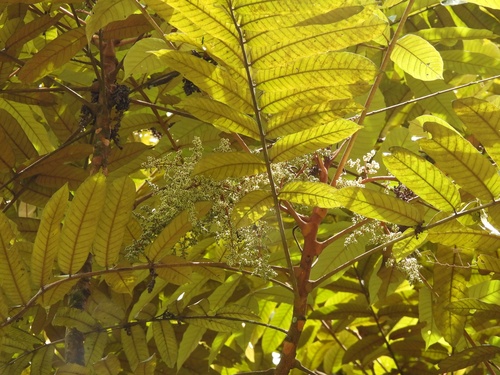
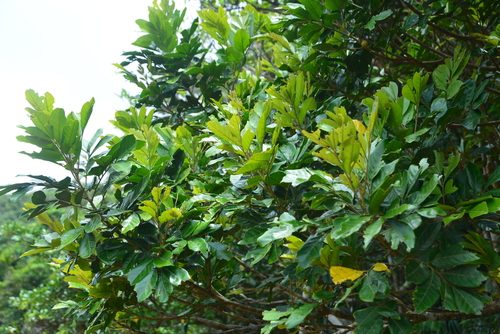
(c) Andrew Hankey, some rights reserved (CC BY-SA), uploaded by Andrew Hankey

(c) Tony Rebelo, some rights reserved (CC BY-SA), uploaded by Tony Rebelo

(c) Mlungisi Ngwenya, some rights reserved (CC BY-NC), uploaded by Mlungisi Ngwenya
What to Eat
Edible parts: Bark - spice
None known
Known Hazards
Where to Find It
It is a tropical plant. It grows in deep fertile soils and along river banks. It grows in wet evergreen forests.
Angola, Asia, Central Africa, Congo, East Africa, Gambia, Ghana, Guinea, Guinée, Indonesia, Liberia, Malawi, SE Asia, Sierra Leone, Uganda, West Africa*,
How to Identify
A tree. It grows 60 m tall. The trunk is 3 m around. It has a straight trunk and buttresses. The bark is smooth and pale with green patches. The branches are stout and the crown is round. The leaves are compound with leaflets along the stalk. There are 2-4 pairs of leaflets and they are 15 cm long by 8 cm wide. They are papery. The flowers are small and white.The fruit are woody capsules with 4 valves. They have a narrow wing.
How to Grow
Plants can be grown by seeds. It needs light to grow.
Propagation: Fresh seed germinates best, often reaching nearly 100%, remaining viable over one year. Sow in lightly shaded nursery seedbeds rather than containers for superior results; germination begins in approximately 3 weeks. Pot seedlings into individual containers when 5cm tall; grow for 12 months until 30cm tall and ready for planting. Containerized seedlings outperform bare-rooted stock. Harvest seed capsules when beginning to split, sun-dry until splitting, then hand-shell. Further dry seeds and store sealed in refrigerated containers since viability rapidly declines at ambient temperatures.
Medicinal Uses
Bitter bark widely used in traditional medicine. Infusions treat colds and fevers. Decoctions or infusions address fevers, colds, pneumonia, abdominal pain, vomiting, and gonorrhea. Powdered bark taken as aphrodisiac and for male impotence treatment. External bark application treats wounds, sores, and ulcers. Seed oil rubbed into hair kills lice. Root decoctions treat anemia, dysentery, and rectal prolapse. Anti-anemic bark use confirmed in preliminary testing showing iron (16 mg/100g), copper (0.7 mg/100g), and ascorbic acid content. Stem, bark, and seeds contain limonoids.
Other Uses
Reddish-brown dye extracted from bark. Heartwood pinkish-brown to deep red with copper reflection; 3-8cm pale brown sapwood band. Medium to coarse texture with straight or interlocked grain showing attractive irregular ripple marks. Light to moderately heavy wood, soft to moderately hard; moderately durable against dry wood borers and fungi but susceptible to termites. Seasons rapidly with minimal checking; moderately stable when dry. Usually easy to saw and work despite interlocked grain; keep saws sharp, use 20° cutting angle for smooth finish. Requires filler before staining and varnishing; takes good polish; holds nails and screws well though may split; glues satisfactorily; poor bending properties. Peels and slices excellently for veneer; turns fairly well. Highly valued for furniture, fine cabinetry, veneers, and quality hardwood applications. Large logs traditionally hollowed into dugout canoes. Suitable for fuel and charcoal production. Functions as shade and avenue tree in agroforestry systems.
Wikipedia
Source ↗A large deciduous tree reaching 50 m tall and 30 m wide with fast growth, hardy to UK zone 10 and frost tender. Insect-pollinated flowers. Grows in medium loamy and heavy clay soils with good drainage preference. Tolerates mildly acid to neutral pH including very acid and saline soils. Requires full sun and prefers moist conditions with some drought tolerance. Withstands strong winds but not maritime exposure.
Names & Synonyms
Mbawa, Pohon mahoni merah
References (3)
- Bunderson, W. T. et al, 2002, Common Agroforestry Species in Malawi. Malawi Agroforestry Extension Project, Pubication No. 46, Lilongwe. p 31 (Also as Khaya nyasica)
- Oteng-Amoako, A. A. (Ed.), 2006, 100 Tropical African Timber Trees from Ghana. Forestry Research Institute of Ghana. p 168
- Sukarya, D. G., (Ed.) 2013, 3,500 Plant Species of the Botanic Gardens of Indonesia. LIPI p 343