Viola arvensis
Murray
Field pansy
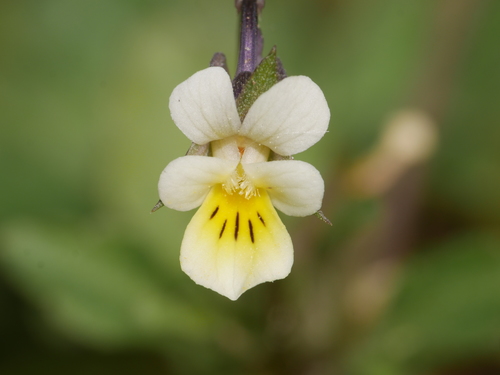
(c) Alexis Tinker-Tsavalas, some rights reserved (CC BY), uploaded by Alexis Tinker-Tsavalas
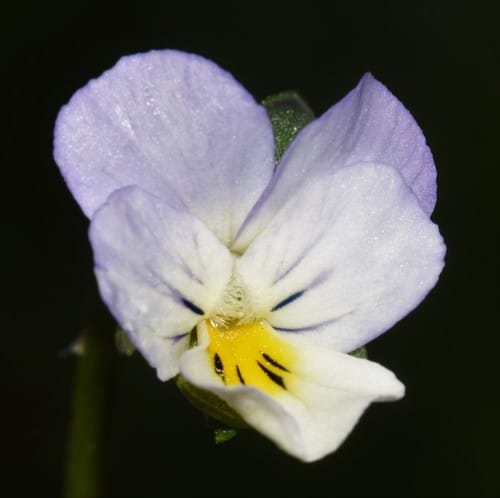
(c) Rolf Theodor Borlinghaus, some rights reserved (CC BY-NC)
What to Eat
Edible parts: Flowers, Leaves
The leaves are traditionally boiled and eaten, and the small flowers are eaten fresh in salads.
Where to Find It
It is a Mediterranean plant. It grows in exposed places and abandoned fields. In Argentina it grows from sea level to 1,100 m above sea level.
Africa, Argentina, Asia, Australia, Balkans, Belarus, Bosnia, Caucasus, Chile, Croatia, Europe, Falklands, Gerogia, Korea, Lithuania, Luxembourg, Mediterranean, North Africa, Russia, South Africa, Taiwan, Tasmania,
How to Identify
A herb. It grows for one or two years. It grows 5-50 cm tall. The leaves are 1-7 cm long by 1-2 cm wide. They have some hairs especially along the edges and veins. There are some teeth along the edge. There can be a few or many flowers. They are funnel shaped and yellow.
Wikipedia
Source ↗Viola arvensis is a species of violet known by the common name field pansy. It is native to Europe, western Asia, and North Africa, and it is known on other continents as an introduced species and a weed of disturbed and cultivated areas. Viola arvensis was shown to contain cyclotides, a class of peptides found in plants. The peptide cycloviolacin O2 in particular has shown to possess cytotoxic activity against human cancer cells and is therefore looked at as a potential drug lead.
Names & Synonyms
Bratki, Kokna volica, Koknja volica, Njvska vijolica, P'at'arvzala
References (9)
- Benvenuti, S. & Mazzoncini, M., 2021, The Biodiversity of Edible Flowers: Discovering New Tastes and New Health Benefits. Frontiers in Plant Science Article 569499.
- Bussman, R. W., et al, 2021, Unity in diversity—food plants and fungi of Sakartvelo (Republic of Georgia), Caucasus. Journal of Ethnobiology and Ethnomedicine (2021) 17:72 p 15
- http://www.botanic-gardens-ljubljana.com/en/plants
- Luczaj et al, 2013, Wild vegetable mixes sold in the markets of Dalmatia (southern Croatia). Journal of Ethnobiology and Ethnomedicine. 8:2
- Luczaj, L. et al, 2013, Wild food plants used in the villages of the Lake Vrana Nature Park (northern Dalmatia, Croatia). Acta Societatis Botanicorum Poloniae, 82(4): 275-281
- Luczaj, L. et al, 2014, Wild Food Plants of Dalmatia (Croatia). in A. Pieroni, C. L. Quave (eds.), Ethnobotany and Biocultural Diversities in the Balkans, p 143
- Shikov, A. N. et al, 2017, Traditional and Current Food Use of Wild Plants Listed in the Russian Pharmacopoeia. Frontiers in Pharmacology. Vol. 8 Article 841
- Soukand, R., et al, 2017, Multi-functionality of the few: current and past uses of wild plants for food and healing in Liubań region, Belarus. Journal of Ethnobiology and Ethnomedicine (2017) 13:10
- Upson, R., & Lewis R., 2014, Updated Vascular Plant Checklist and Atlas for the Falkland Islands. Falklands Conservation and Kew.