Ixora brachiata
Roxb.
RubiaceaeFruit

iNaturalist · cc-by-nc
(c) Mayuresh Kulkarni, some rights reserved (CC BY-NC), uploaded by Mayuresh Kulkarni
(c) Mayuresh Kulkarni, some rights reserved (CC BY-NC), uploaded by Mayuresh Kulkarni
iNaturalist · cc-by
(c) Harsha Jayaramaiah, some rights reserved (CC BY)
(c) Harsha Jayaramaiah, some rights reserved (CC BY)
iNaturalist · cc-by
(c) Harsha Jayaramaiah, some rights reserved (CC BY)
(c) Harsha Jayaramaiah, some rights reserved (CC BY)
What to Eat
Edible parts: Fruit
The ripe fruit are eaten.
Where to Find It
It is a tropical plant. It grows in high rainfall areas. It grows as an understorey plant in disturbed evergreen forests up to 1,400 m above sea level.
Asia, India,
Countries: United Arab Emirates, Afghanistan, Armenia, Azerbaijan, Bangladesh, Bahrain, Brunei, Bhutan, China, Georgia, Indonesia, Israel, India, Iraq, Iran, Jordan, Japan, Kyrgyzstan, Cambodia, North Korea, South Korea, Kuwait, Kazakhstan, Laos, Lebanon, Sri Lanka, Myanmar, Mongolia, Maldives, Malaysia, Nepal, Oman, Philippines, Pakistan, Qatar, Saudi Arabia, Singapore, Syria, Thailand, Tajikistan, Timor-Leste, Turkmenistan, Turkey, Taiwan, Uzbekistan, Vietnam, Yemen
How to Identify
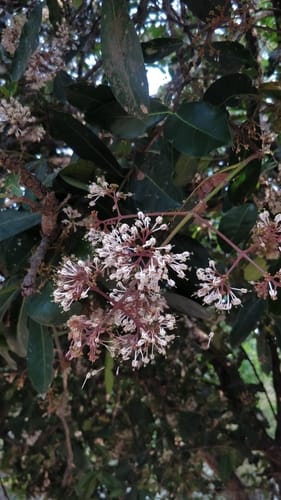
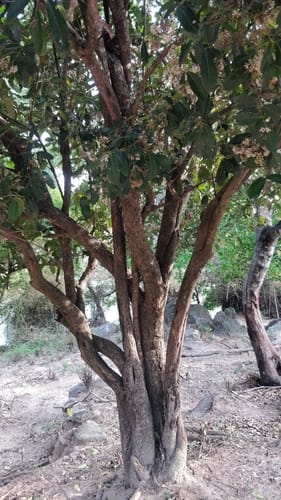
A shrub or small tree. It grows 5-10 m tall. The bark is brown and scaly. The leaves are simple and opposite. The leaf blade is 8-18 cm long by 5-7 cm wide. The flowers are in groups near the end of branches. They are small, white and have a scent. The fruit is a round berry. It is 6 mm long and reddish when ripe. There are 2 seeds.
Production
In southern India it flowers and fruits January to May.
Names & Synonyms
Borbale, Gurani, Kurati, Malathechi, Marachethi
Ixora arnottiana Miq. ex Hook.f.Ixora obtusata Miq. ex Hook.f.
References (1)
- Yesodharan, K. & Sujana, K. A., 2007, Wild edible plants traditionally used by the tribes in the Parambokulam Wildlife Sanctuary, Kerala, India. Natural Product Radiance 6(1) pp 74-80


