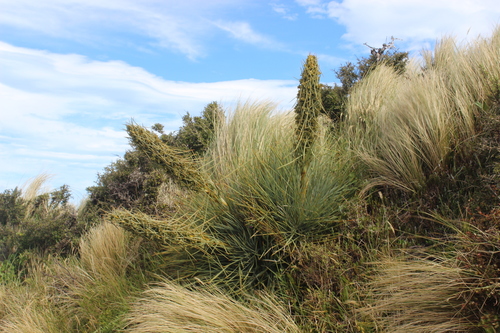
Heracleum rigens
Wall. ex DC.

Royal Botanic Gardens, Kew

Royal Botanic Gardens, Kew

Royal Botanic Gardens, Kew
What to Eat
Edible parts: Leaves, Fruit
The leaves and fruit are eaten.
Where to Find It
It is a tropical plant. It grows in evergreen forests.
Asia, India,
How to Identify
A large herb or small shrub. It has tuberous roots and keeps growing from year to year. It grows 1 m tall. The leaves are large and twice divided. The leaves have lobes and these vary in size becoming smaller towards the tip. There are teeth along the edge. The leaves are hairy. The flowers are large and in erect compound groups with stalks from the same point. The flowers have 5 oval petals. The fruit are 1 cm long by 0.5 cm wide. They are narrowly oval and flattened with 3 ridges.
Medicinal Uses
The plant is used in medicine.
Production
In southern India plants flower and fruit August to September.
Notes
An unresolved name in The Plant List. It is used in medicine.
Names & Synonyms
Chittelam, Kattu kothamalli, Rai kai
References (1)
- Arinathan, V., et al, 2007, Wild edibles used by Palliyars of the western Ghats, Tamil Nadu. Indian Journal of Traditional Knowledge. 6(1) pp 163-168