Codonopsis clematidea
(Schrenk.) C. B. Clarke
(c) Татьяна Меньшикова, some rights reserved (CC BY-NC), uploaded by Татьяна Меньшикова
(c) Татьяна Меньшикова, some rights reserved (CC BY-NC), uploaded by Татьяна Меньшикова
(c) Thomas Calame, some rights reserved (CC BY-NC), uploaded by Thomas Calame
What to Eat
Edible parts: Roots
Codonopsis lanceolata (Korean: deodeok) is used as a food in Korean cuisine.
Where to Find It
It is a temperate plant. It grows in cold desert in north India. In western China it grows in mountain forests and by streams between 1,700-2,500 m above sea level. In the Indian Himalayas it grows between 3,000-4,100 m above sea level.
Afghanistan, Asia, Central Asia, China, Himalayas, India, Kazakhstan, Kyrgyzstan, Mongolia, Pakistan, Slovenia, Tajikistan, Tibet,
How to Identify
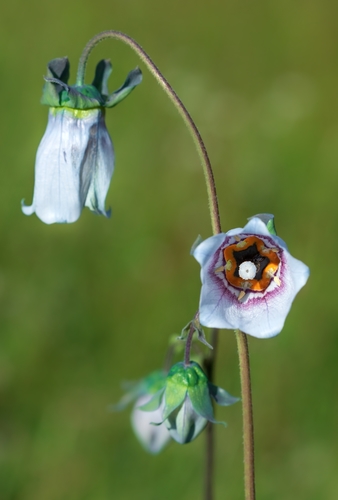
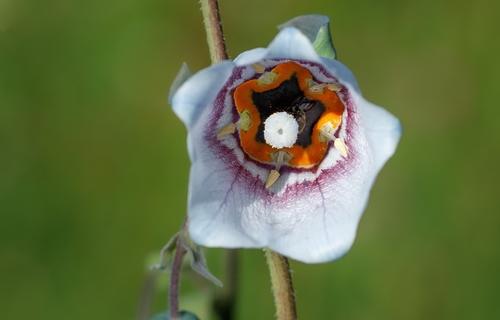
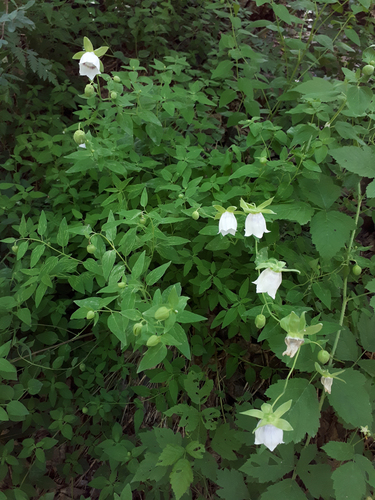
A herb. It keeps growing from year to year. The roots are carrot-shaped. They are 25-45 cm long by 1-3 cm wide. The stems are 50-100 cm tall. The lower branches are slender and erect and those higher up have flowers. The leaves on the stem are alternate and those on the branches are opposite. They are 1-4 cm long by 1-2 cm wide. They are hairy underneath. The flowers are pale blue with dark blue veins.
Medicinal Uses
Codonopsis pilosula (Chinese: 党参; pinyin: dǎngshēn) is an important medicinal herb in traditional Chinese medicine.
Other Information
The roots are eaten raw as a snack in the field.
Names & Synonyms
Bruktung, Mokhting
References (3)
- Ballabh, B., et al, 2007, Raw edible plants of cold desert Ladakh. Indian Journal of Traditional Knowledge. 6(1) pp 182-184
- Sharma, L. et al, 2018, Diversity, distribution pattern, endemism and indigenous uses of wild edible plants in Cold Desert Biosphere Reserve of Indian Trans Himalaya. Indian Journal of Traditional Knowledge. Vol 17(1) January 2018 pp 122-131
- Urgamal, M., Oyuntsetseg, B., Nyambayar, D. & Dulamsuren, Ch. 2014. Conspectus of the vascular plants of Mongolia. (Editors: Sanchir, Ch. & Jamsran, Ts.). Ulaanbaatar, Mongolia. “Admon“ Press. 334pp. (p. 158-187).


