Neocinnamomum caudatum
(Nees) Merr.
LauraceaeFruit
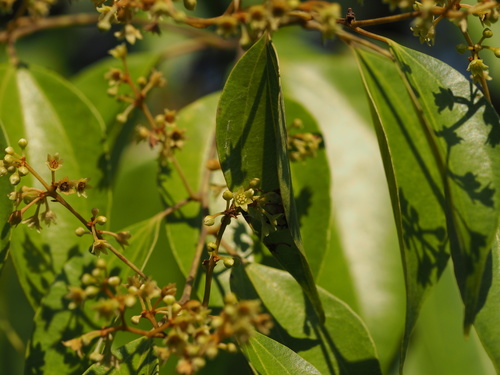
iNaturalist · cc-by-nc
(c) 小铖/Smalltown, some rights reserved (CC BY-NC), uploaded by 小铖/Smalltown
(c) 小铖/Smalltown, some rights reserved (CC BY-NC), uploaded by 小铖/Smalltown
What to Eat
Edible parts: Fruit
The ripe fruit are eaten raw.
Where to Find It
It is a subtropical plant. It grows in forests near streams. In southern China it grows between 500-1,800 m above sea level. In Yunnan.
Asia, Bhutan, China, Himalayas, India, Indochina, Myanmar, Nepal, Northeastern India, SE Asia, Thailand, Vietnam,
Countries: United Arab Emirates, Afghanistan, Armenia, Azerbaijan, Bangladesh, Bahrain, Brunei, Bhutan, China, Georgia, Indonesia, Israel, India, Iraq, Iran, Jordan, Japan, Kyrgyzstan, Cambodia, North Korea, South Korea, Kuwait, Kazakhstan, Laos, Lebanon, Sri Lanka, Myanmar, Mongolia, Maldives, Malaysia, Nepal, Oman, Philippines, Pakistan, Qatar, Saudi Arabia, Singapore, Syria, Thailand, Tajikistan, Timor-Leste, Turkmenistan, Turkey, Taiwan, Uzbekistan, Vietnam, Yemen
How to Identify
A tree. It grows 5-15 m tall. The trunk is 25-38 cm across. The leaves are alternate and 5-12 cm long by 3-5 cm wide. The fruit are 1.5-2 cm long by 1 cm wide. The fruit are red when ripe.
Names & Synonyms
Makbil teangk, Panen, Re duoi, Samijang
Neocinnamomum poilanei H. LiuNeocinnamomum yunnanense H. Liu
References (2)
- Singh, B., et al, 2012, Wild edible plants used by Garo tribes of Nokrek Biosphere Reserve in Meghalaya, India. Indian Journal of Traditional Knowledge. 11(1) pp 166-171
- www.efloras.org Flora of China Volume 7


