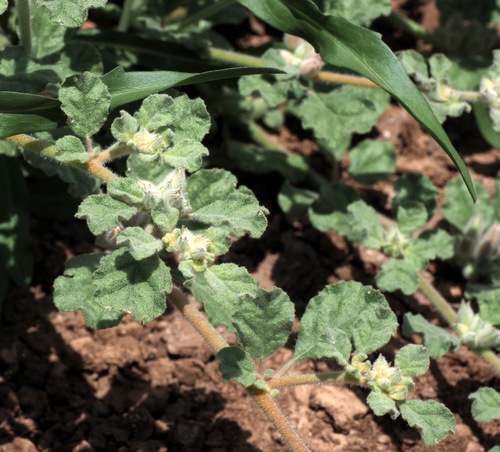
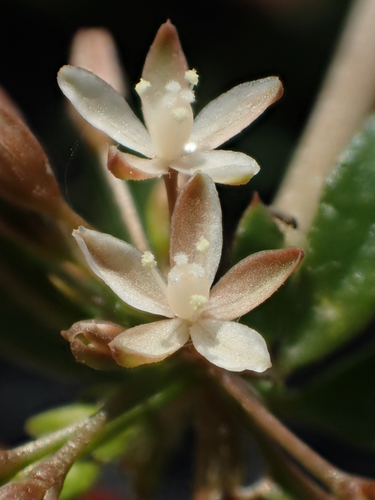
Glinus herniarioides
(Gagnep.) Tardieu
MolluginaceaeShoots

gbif · cc-by
Royal Botanic Gardens, Kew
Royal Botanic Gardens, Kew
What to Eat
Edible parts: Stem
The young stems are boiled and eaten as a vegetable.
Where to Find It
It is a tropical plant. In Yunnan.
Asia, Cambodia, China, Indochina, Laos, SE Asia, Thailand, Vietnam,
Countries: United Arab Emirates, Afghanistan, Armenia, Azerbaijan, Bangladesh, Bahrain, Brunei, Bhutan, China, Georgia, Indonesia, Israel, India, Iraq, Iran, Jordan, Japan, Kyrgyzstan, Cambodia, North Korea, South Korea, Kuwait, Kazakhstan, Laos, Lebanon, Sri Lanka, Myanmar, Mongolia, Maldives, Malaysia, Nepal, Oman, Philippines, Pakistan, Qatar, Saudi Arabia, Singapore, Syria, Thailand, Tajikistan, Timor-Leste, Turkmenistan, Turkey, Taiwan, Uzbekistan, Vietnam, Yemen
How to Identify
A herb. It grows 10-40 cm tall. It lies along the ground. It grows each year from seed. The leaves are in false rings of 3-6. The leaf blade is spoon shaped or narrowly oval and 1-3 cm long by 3-6 mm wide. The flowers do not have stalks.
Names & Synonyms
Phak see siad, Rau-dang
Mollugo herniaroides Gagnep.
References (1)
- Eiadthong, W., et al, 2010, Management of the Emerald Triangle Protected Forests Complex. Botanical Consultant Technical Report. p 49