Randia sonorensis
Wiggins
Papache del zorro
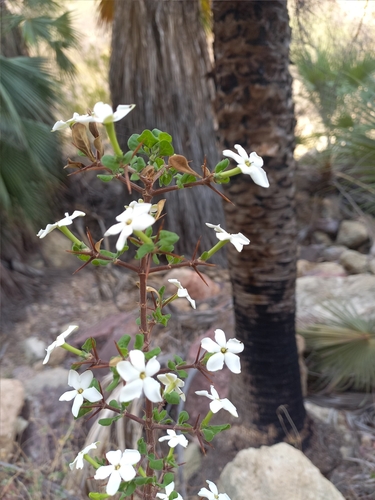
iNaturalist · cc-by-nc
(c) Usvaldo GC, some rights reserved (CC BY-NC), uploaded by Usvaldo GC
(c) Usvaldo GC, some rights reserved (CC BY-NC), uploaded by Usvaldo GC

iNaturalist · cc-by
(c) Sue Carnahan, some rights reserved (CC BY)
(c) Sue Carnahan, some rights reserved (CC BY)

iNaturalist · cc-by
(c) Sue Carnahan, some rights reserved (CC BY)
(c) Sue Carnahan, some rights reserved (CC BY)
What to Eat
Edible parts: Fruit
The fruit are eaten, though they contain many seeds.
Known Hazards
How to Identify
A spindly shrub. It grows 2-3 m tall. It has slender twigs tipped with spines. These are 6-15 mm long. The twigs have rusty brown hairs. The leaves are 8-33 mm long by 6-22 mm wide. They can be alternate on long shoots or in groups at the tips of the stem. The flowers are yellow to white. The fruit are round and pulpy. They are 2-3.5 cm across.
Names & Synonyms
Cahui jugauri, Josocora quehuechi
References (2)
- Hodgson, W. C., 2001, Food Plants of the Sonoran Desert. University of Arizona Press.
- Yetman, D., 2002, The Guarijios of the Sierra Madre: Hidden People of Northwestern Mexico. University of New Mexico Press. p 222


