Randia obcordata
S. Watson
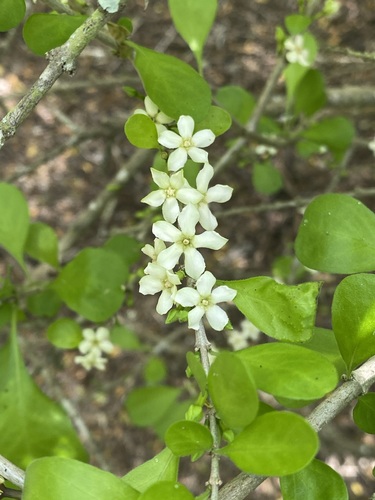
iNaturalist · cc-by-nc
(c) jherrera05, some rights reserved (CC BY-NC)
(c) jherrera05, some rights reserved (CC BY-NC)
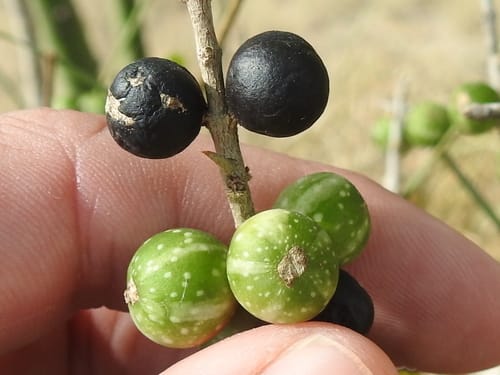
iNaturalist · cc-by
(c) Sam Kieschnick, some rights reserved (CC BY)
(c) Sam Kieschnick, some rights reserved (CC BY)
What to Eat
Edible parts: Fruit, Caution
The fruit are eaten.
Known Hazards
Where to Find It
It is a subtropical plant. It grows on hillsides in the Cedros Valley, Sonora.
Mexico, North America,
Countries: Antigua & Barbuda, Barbados, Bahamas, Belize, Canada, Costa Rica, Cuba, Dominica, Dominican Republic, Grenada, Guatemala, Honduras, Haiti, Jamaica, St Kitts & Nevis, St Lucia, Mexico, Nicaragua, Panama, Puerto Rico, El Salvador, Trinidad & Tobago, United States, St Vincent
How to Identify
A shrub. It grows 2-4 m tall. It has thorns. The spines are stout, in pairs and 4-10 mm long. The leaves are 4-20 mm long and wide and in tufts. The flowers are small, white and tube shaped. They occur singly and do not have stalks. The fruit are mottled green when young and yellow to black when ripe. They are 5-9 mm across. The fruit can make people sick.
Production
It flowers and fruits intermittently throughout the year.
Names & Synonyms
Papache borracho, Papachillo
Randia gaumeri Greenm. & C. H. Thomps.Randia rhagocarpa Standl.Randia texensis Lundell
References (1)
- Yetman, D., 2002, The Guarijios of the Sierra Madre: Hidden People of Northwestern Mexico. University of New Mexico Press. p 222


