Cinna latifolia
(Trevir.) Griseb.
Sweet reed grass
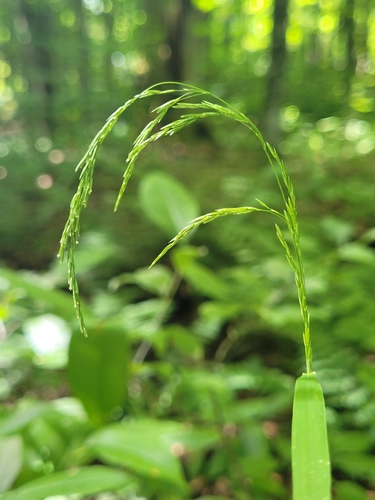
(c) Samuel Brinker, some rights reserved (CC BY-NC), uploaded by Samuel Brinker
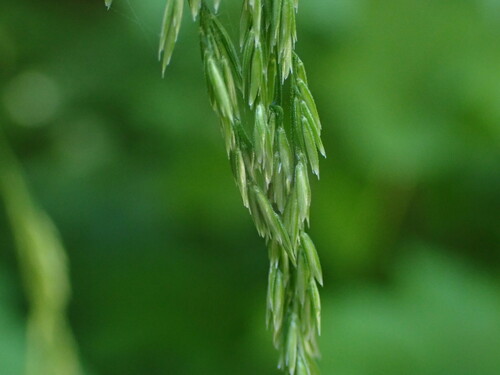
(c) spinescence, some rights reserved (CC BY-NC), uploaded by spinescence

(c) Belinda Lo, some rights reserved (CC BY-NC-SA)
What to Eat
Edible parts: Seeds, Cereal
The grains of slender woodreed are edible, though yields are low and populations are sparse, particularly in the Southwest. It is best treated as a supplementary wild grain gathered opportunistically rather than a plant worth targeting specifically. The seeds are small and require the same general processing used for other wild grass seeds: harvesting, drying, and separation from chaff. No detailed flavour descriptions are recorded, but the grains are likely mild and grain-like, suitable for boiling into porridge, grinding into flour, or combining with other wild grass seeds. Careful winnowing is needed to remove chaff, and cooking improves digestibility. Because individual plant yields are modest, combining seeds from multiple species is the most practical approach. Seeds are harvested in early autumn when the panicles dry and grains loosen naturally. Seed heads can be clipped and dried further if needed, then gently crushed and winnowed. The cleaned grains can be boiled whole, toasted, or ground. Slender woodreed flowers from July through August, with grains available from September until frost ends the season — a relatively short and elevation-dependent harvest window. The grains of slender woodreed were gathered by the Goshiute Indians of Utah and Nevada as part of a broader tradition of harvesting wild grass seeds, contributing to seasonal food diversity rather than serving as a staple.
Where to Find It
It is a temperate plant. It grows in damp places in woodlands and along river sides.
Asia, Canada, China, Europe, Japan, Korea, Mongolia, North America, Russia, USA,
How to Identify
A grass. It can have one stalk or a cluster. It grows 0.6-1.6 m tall. The stalk is 2-3 mm across. The leaves are narrow and 15-30 cm long by 10-15 mm wide. The flower panicle droops. It is 15-40 cm long. The seeds are 2 mm long.
How to Grow
Propagation: Seed — sow in spring in a cold frame, barely covering the seed. When large enough to handle, prick seedlings into individual pots and grow on in a cold frame for at least their first winter. Plant out into permanent positions in late spring or early summer, after the last expected frosts.
Medicinal Uses
None known
Other Uses
As a native grass of moist mountain habitats, slender woodreed contributes to soil stabilization along streams and seeps. Its seeds provide food for birds and small mammals, and its foliage offers cover for insects and ground-dwelling wildlife.
Wikipedia
Source ↗Cinna latifolia is a species of grass known by the common name drooping woodreed. It is a native bunchgrass to the Northern Hemisphere, where it has a circumboreal distribution. It grows in moist habitat, such as forest understory and riverbanks. It reaches nearly two meters in maximum height. The inflorescence is an open array of spikelets generally green to purple-tinted in color. It flowers in late summer and fall.
References (2)
- Beckstrom-Sternberg, Stephen M., and James A. Duke. "The Foodplant Database." http://probe.nalusda.gov:8300/cgi-bin/browse/foodplantdb.(ACEDB version 4.0 - data version July 1994)
- Plants for a Future database, The Field, Penpol, Lostwithiel, Cornwall, PL22 0NG, UK. http://www.scs.leeds.ac.uk/pfaf/


