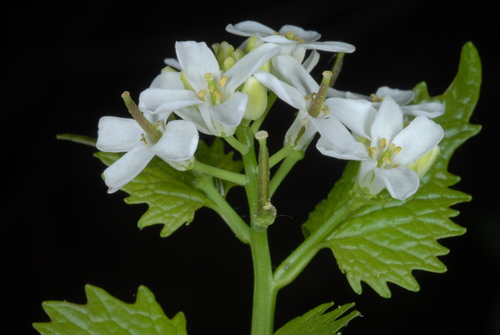
Cakile lanceolata
(Willd.) O. E. Schulz
Sky rocket

iNaturalist · cc-by-nc-sa
(c) Bob Peterson, some rights reserved (CC BY-NC-SA)
(c) Bob Peterson, some rights reserved (CC BY-NC-SA)

iNaturalist · cc-by-nc
(c) birrdmaven, some rights reserved (CC BY-NC)
(c) birrdmaven, some rights reserved (CC BY-NC)

iNaturalist · cc-by
(c) Sam Fraser-Smith, some rights reserved (CC BY)
(c) Sam Fraser-Smith, some rights reserved (CC BY)
What to Eat
Edible parts: Leaves, Fruit pods
The young leaves are eaten raw or in soups and stews. The fleshy fruit pods are also eaten.
Where to Find It
It is a tropical plant. It grows on sand dunes and coastal areas.
Anguilla, Aruba, Bahamas, Belize, Central America, Colombia, Cuba, Dominican Republic, Guatemala, Honduras, Jamaica, Nicaragua, North America, Panama, Puerto Rica, South America, Turks & Caicos, USA, Venezuela, West Indies, Winward Is.,
Countries: Antigua & Barbuda, Argentina, Barbados, Bolivia, Brazil, Bahamas, Belize, Canada, Chile, Colombia, Costa Rica, Cuba, Dominica, Dominican Republic, Ecuador, Grenada, French Guiana, Guatemala, Guyana, Honduras, Haiti, Jamaica, St Kitts & Nevis, St Lucia, Mexico, Nicaragua, Panama, Peru, Puerto Rico, Paraguay, Suriname, El Salvador, Turks & Caicos, Trinidad & Tobago, United States, Uruguay, St Vincent, Venezuela
How to Identify
A herb in the mustard family (Brassicaceae) with young leaves that have a mustard flavour. It grows on sand dunes and coastal areas in tropical regions.
Names & Synonyms
Cakile aequalis L'Her. ex DC.Raphanus lanceolatus Willd.and others
References (4)
- Bounty from the Bush - Edible Wild Plants
- Kermath, B. M., et al, 2014, Food Plants in the Americas: A survey of the domesticated, cultivated and wild plants used for Human food in North, Central and South America and the Caribbean. On line draft. p 157
- Kew Plants of the World onLine
- Tozer, F., 2007, The Uses of Wild Plants. Green Man Publishing. p 50