Amomum coriandriodorum
S. Q. Tong & Y. M. Xia

GBIF

GBIF

GBIF
What to Eat
Edible parts: Flowers, Leaves - spice
Young leaves are used as a spice and are sold in local markets. Flowers are also eaten.
Where to Find It
It is a tropical plant. It grows in forests between 1,300-1,500 m above sea level in southern China. In Yunnan. In Queen Sirikit.
Asia, China, SE Asia, Thailand,
How to Identify
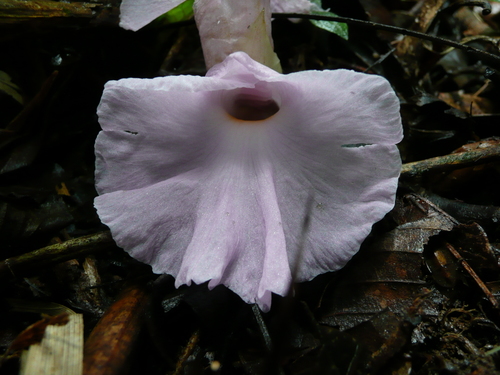
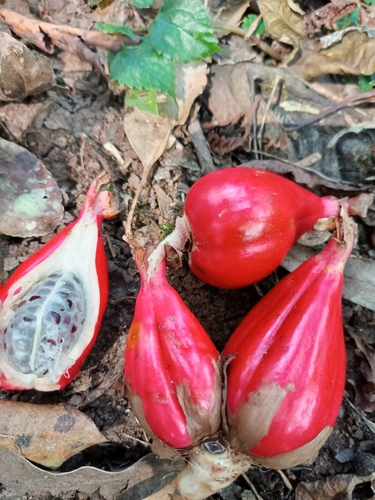
A ginger family herb. It grows 1-2 m tall. The plant has the smell of coriander. The leaves do not have leaf stalks. The leaves are narrowly oval and 20-40 cm long by 5-12 cm wide. The spike is oval and 7 cm long by 5 cm wide. It gets wider in fruit. The flowers have red bracts and the tube is yellowish-green. The fruit is a purplish red capsule.
Medicinal Uses
Traditionally used as a spice.
Other Information
Leaves are sold in local markets.
Names & Synonyms
Cao guo, Gui hao, Ya ma hao
References (2)
- Cao, Y., et al, 2020, Ethnobotanical study on wild edible plants used by three trans-boundary ethnic groups in Jiangcheng County, Pu’er, Southwest China. Journal of Ethnobiology and Ethnomedicine (2020) 16:66
- Liu, Yi-tao, & Long, Chun-Lin, 2002, Studies on Edible Flowers Consumed by Ethnic Groups in Yunnan. Acta Botanica Yunnanica. 24(1):41-56