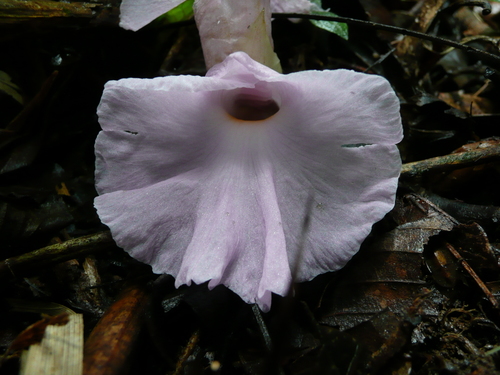
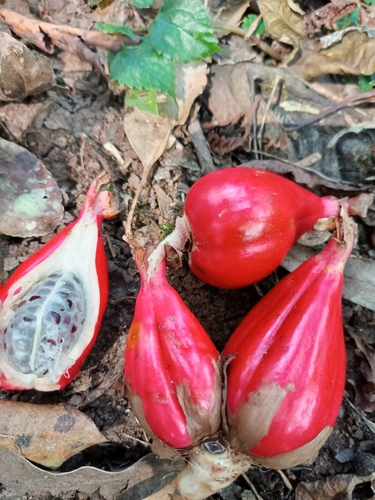
Zingiber densissimum
S. Q. Tong & Y. M. Xia
ZingiberaceaeFlowers

iNaturalist · cc-by-nc
(c) ayuwat, some rights reserved (CC BY-NC)
(c) ayuwat, some rights reserved (CC BY-NC)
iNaturalist · cc-by-nc
(c) Supakan Simachai, some rights reserved (CC BY-NC)
(c) Supakan Simachai, some rights reserved (CC BY-NC)
iNaturalist · cc-by-nc
(c) Supakan Simachai, some rights reserved (CC BY-NC)
(c) Supakan Simachai, some rights reserved (CC BY-NC)
What to Eat
Edible parts: Flowers
The flowers are edible.
Where to Find It
It is a tropical plant. It grows in mixed forests at about 1,400 m above sea level in southern China. In Yunnan.
Asia, China, Indochina, SE Asia, Thailand,
Countries: United Arab Emirates, Afghanistan, Armenia, Azerbaijan, Bangladesh, Bahrain, Brunei, Bhutan, China, Georgia, Indonesia, Israel, India, Iraq, Iran, Jordan, Japan, Kyrgyzstan, Cambodia, North Korea, South Korea, Kuwait, Kazakhstan, Laos, Lebanon, Sri Lanka, Myanmar, Mongolia, Maldives, Malaysia, Nepal, Oman, Philippines, Pakistan, Qatar, Saudi Arabia, Singapore, Syria, Thailand, Tajikistan, Timor-Leste, Turkmenistan, Turkey, Taiwan, Uzbekistan, Vietnam, Yemen
How to Identify
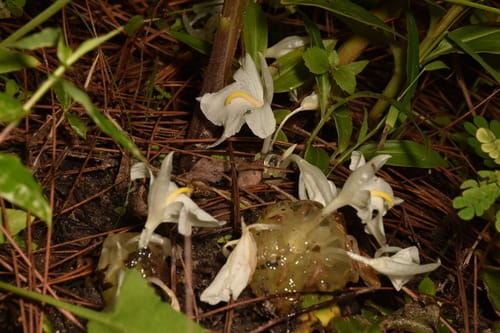
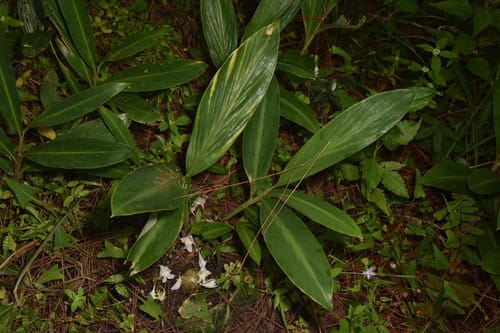
A ginger family herb. The false stems are 40-70 cm long. The leaves are gathered at the top. They are narrowly sword shaped and 22-45 cm long by 4-9 cm wide. They have silvery hairs underneath. The flowering stems arise from the rhizome. They are oval and 5 cm long by 4 cm wide. The flowers are white.
References (1)
- Liu, Yi-tao, & Long, Chun-Lin, 2002, Studies on Edible Flowers Consumed by Ethnic Groups in Yunnan. Acta Botanica Yunnanica. 24(1):41-56