Lepidium coronopus
(L.) Al-Shehbaz
Swine-cress, Creeping wart cress

(c) 2010 Zoya Akulova, some rights reserved (CC BY-NC)

(c) Bart Wursten, some rights reserved (CC BY-NC-SA)

(c) Bart Wursten, some rights reserved (CC BY-NC-SA)
What to Eat
Edible parts: Leaves
It was previously used as an alternative to watercress (in salads), but it was deemed such poor quality and only suitable for pigs to eat. It is thought to be slightly tasting of mustard.
Where to Find It
It is a temperate plant. It can grow on beaches and in waste ground.
Africa, Asia, Australia, Britain, Caucasus, Europe, Ireland, Italy, Mediterranean, New Zealand, North America, South America, Tasmania, USA,
How to Identify
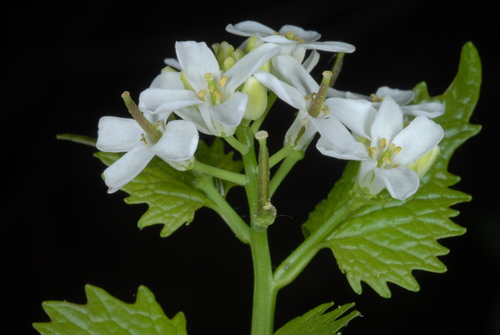
A cabbage family herb. It grows from seed each year or can take 2 years to complete its life-cycle. The leaves at the base are in a ring. The leaves are divided one or two times. The flowers are small and white. They are in crowded clusters spaced along the stem.
Medicinal Uses
The chemotaxonomy of the plant was completed in 2008. It's chromosome count is 2n = 32.
Wikipedia
Source ↗Lepidium coronopus, (swine cress, creeping wart cress, or greater swine cress), is a species of flowering plant in the mustard family which is native to parts of Africa, western Asia and Europe, growing in shingle banks, wasteland or cultivated fields.
Names & Synonyms
References (5)
- Biscotti, N. et al, 2018, The traditional food use of wild vegetables in Apulia (Italy) in the light of Italian ethnobotanical literature. Italian Botanist 5:1-24
- Irving, M., 2009, The Forager Handbook, A Guide to the Edible Plants of Britain. Ebury Press p 89 (As Coronopus squamatus)
- Nimis, P. L., et al, 2015, A guide to the vascular plants of the temporary ponds of Sardinia (Italy) p 146
- Wiersema, J. H. & Leon, B., 2013, World Economic Plants. A Standard Reference CRC Press. 2nd Ed. p 396
- World Checklist of Useful Plant Species 2020. Royal Botanic Gardens, Kew