Oxalis incarnata
L.
Pale pink-sorrel

(c) Jill Matsuyama, some rights reserved (CC BY-NC-SA)
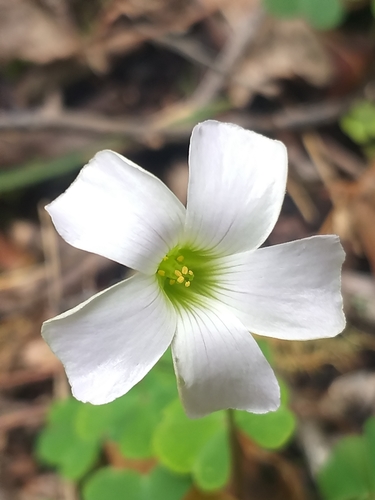
(c) kevin koen, some rights reserved (CC BY-SA), uploaded by kevin koen

(c) Bruce Calvert, some rights reserved (CC BY), uploaded by Bruce Calvert
What to Eat
Edible parts: Leaves, Stems
The leaves can be used as a garnish on soft foods such as ice cream, sorbet, and soft cheese. The stems can be chopped and used in salads or cooked as a vegetable.
Where to Find It
It is a temperate plant. It grows best in shady positions.
Australia, Britain, Europe, Ireland, Tasmania,
How to Identify
A herb. It keeps growing from year to year. It has small bulbs. The stems are upright with a crown of leaves and flowers. These are on single stalks with all stalks growing from a single point.
Wikipedia
Source ↗Oxalis incarnata is a species of flowering plant in the woodsorrel family known by the common names pale pink-sorrel and crimson woodsorrel. It is native to southern Africa, but it can be found on other continents where it is an introduced species, often the descendant of garden escapees. It is grown and kept as an ornamental plant. This is a perennial herb growing from a system of rhizomes and bulbs. The branching, hairless stem grows to nearly 30 centimeters in maximum length. There may be small bulblets located along the stem above ground. The leaves are borne on long petioles in erect bunches, each leaf made up of three leaflets. The solitary flower arises on a peduncle. Each flower has five white to light pink petals.
References (1)
- Irving, M., 2009, The Forager Handbook, A Guide to the Edible Plants of Britain. Ebury Press p 310


