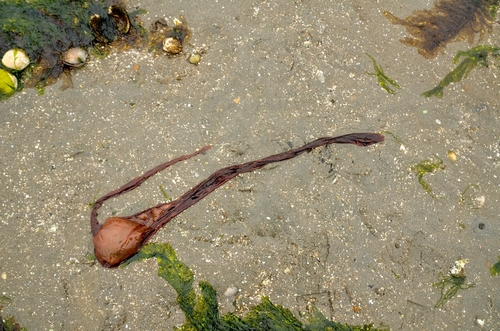
Porphyra linearis
Greville
Laver
food
iNaturalist · cc-by-nc
(c) ðejay (Orkney), some rights reserved (CC BY-NC), uploaded by ðejay (Orkney)
(c) ðejay (Orkney), some rights reserved (CC BY-NC), uploaded by ðejay (Orkney)
iNaturalist · cc-by-nc
(c) ðejay (Orkney), some rights reserved (CC BY-NC), uploaded by ðejay (Orkney)
(c) ðejay (Orkney), some rights reserved (CC BY-NC), uploaded by ðejay (Orkney)
iNaturalist · cc-by-nc
(c) ðejay (Orkney), some rights reserved (CC BY-NC), uploaded by ðejay (Orkney)
(c) ðejay (Orkney), some rights reserved (CC BY-NC), uploaded by ðejay (Orkney)
What to Eat
Edible parts: Seaweed, Fronds, Algae
The fronds and seaweed are edible.
Where to Find It
It grows on rocks near the sand.
Britain, Europe, Ireland,
Countries: Andorra, Albania, Austria, Bosnia & Herzegovina, Belgium, Bulgaria, Belarus, Switzerland, Cyprus, Czechia, Germany, Denmark, Estonia, Spain, Finland, France, United Kingdom, Greece, Croatia, Hungary, Ireland, Iceland, Italy, Liechtenstein, Lithuania, Luxembourg, Latvia, Monaco, Moldova, Montenegro, North Macedonia, Malta, Netherlands, Norway, Poland, Portugal, Romania, Serbia, Russia, Sweden, Slovenia, Slovakia, San Marino, Ukraine
How to Identify
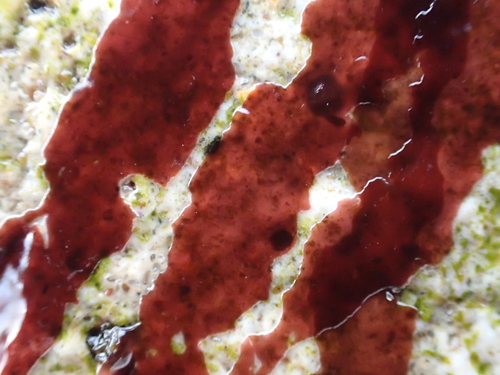
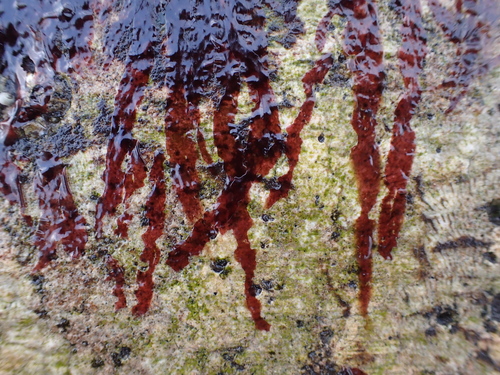
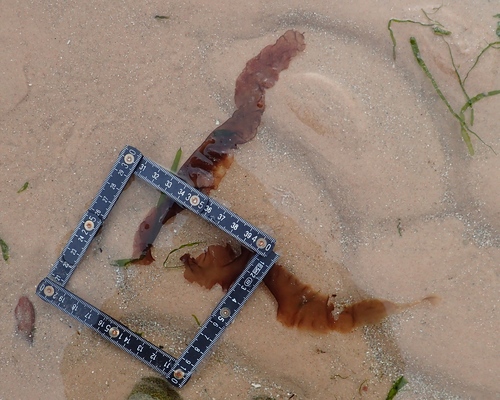
A seaweed with delicate and thin fronds. They can be 20 cm long and 25 mm wide. They are purple to brown.
Wikipedia
Source ↗Porphyra linearis is a red alga found in the coastal waters of Japan. It has only four chromosomes (2n=4) a very low number shared only with the unrelated Haplopappus gracilis.
References (1)
- Irving, M., 2009, The Forager Handbook, A Guide to the Edible Plants of Britain. Ebury Press p 371