Amphipterygium adstringens
(Schltdl.) Standl.
Carano
(c) Luis Alberto, some rights reserved (CC BY-NC), uploaded by Luis Alberto
(c) Leticia Soriano Flores, some rights reserved (CC BY-NC), uploaded by Leticia Soriano Flores
(c) Azul B.M, some rights reserved (CC BY-NC), uploaded by Azul B.M
What to Eat
Edible parts: Fruit stalk
The fruit stalk is edible.
Where to Find It
It is a tropical plant. It grows in deciduous forests. It grows between 200-700 m above sea level.
Central America, Costa Rica, Guatemala, Honduras, Mexico, Nicaragua,
How to Identify
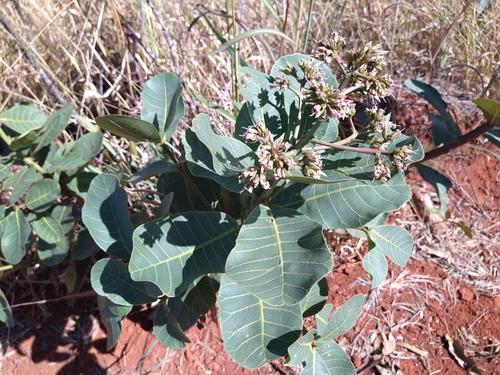
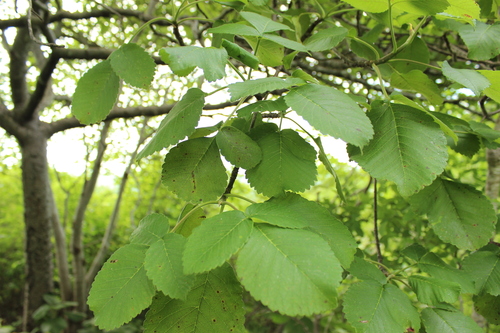
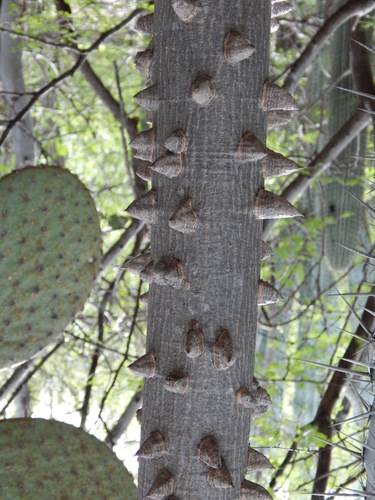
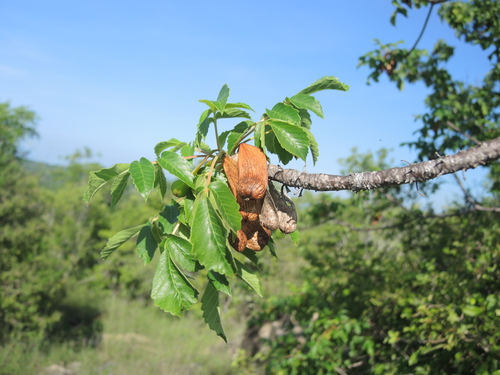
A tree. It grows 4-9 m tall. The bark is wrinkled and grey. It has corky lumps. The branches have scars of fallen leaves. The leaves are compound with leaflets along the stalk and one at the end. There are 3-7 leaflets. The leaflets have a wedge shaped base. There are teeth along the edge. The end leaflet is spoon shaped. The male flowering shoot is 8-9 cm long. The female flowers are 1.3 cm long. There are 2-4 flowers.
How to Grow
Plants can be grown from seeds. The fruit can be washed and soaked in water fro 24 hours and then planted without having to removed the seeds from the fruit.
Medicinal Uses
Cuachalalate is a legendary plant in Mexico believed to have curative effects. The most sought after part of the plant is its bark. This bark is believed to cure malaria, stomach cancer, gastric ulcers and kidney sicknesses. Many people in Mexico also use the Cuachalalate to harden their gums.
Other Uses
The bark contains tannins and also yields a red dye. The sapwood is white and thin, the heartwood dark brown.
Wikipedia
Source ↗Amphipterygium adstringens, or the cuachalalate, is an ancient medicinal plant that has been commercially used in Mexico for centuries. Because of its ever-growing popularity and since the most sought after part of the plant is its bark, the cuachalalate was as of 2004 considered an endangered species. The Amphipterygium adstringens tree's height ranges from 4–8.5 m high. The distinguishing factor of this tree is its bark. Its bark is wrinkled, grayish in color and verrucose, with corky protuberances. Its branches are usually covered with scars of fallen leaves and may be bare or covered with fine hair-like structures. Its leave arrangements is imparipinnate with petioles that average 5.4 cm in length. It usually has 3-7 leaflets leaf. These leaflets have a cuneate base and an obtuse or rounded apex, its margin is dentate or crenate. A. adstringens can be differentiated from the other members of the Amphipterygium genus by the shape of its terminal leaflets, which is spathulate, and has dentate margins on the distal half of the leaflet.
Production
Plants flower June to August and fruit August to January.
Notes
The bark is used for medicine.
Names & Synonyms
Chalalate, Coachalalate, Copal carano, Cuacha, Cuachalalate
References (2)
- Ferns, Useful Tropical Plants.
- Kermath, B. M., et al, 2014, Food Plants in the Americas: A survey of the domesticated, cultivated and wild plants used for Human food in North, Central and South America and the Caribbean. On line draft. p 59