Dracontium spruceanum
(Schott) G. H. Zhu
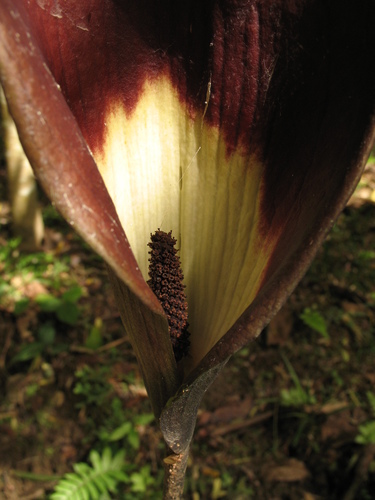
(c) Mateo Hernandez Schmidt, some rights reserved (CC BY-NC-SA), uploaded by Mateo Hernandez Schmidt
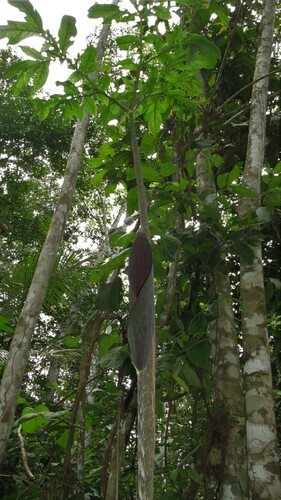
(c) Jorge L. Peña, some rights reserved (CC BY-NC)
What to Eat
Edible parts: Tubers, Root
The tubers are cooked and eaten.
Where to Find It
It is a tropical plant. It grows in the rainforest.
Amazon, Brazil, Central America, Colombia, Costa Rica, Ecuador, Panama, Peru, South America, Suriname,
How to Identify
A tropical rainforest plant in the Araceae (taro) family with lobed leaves and edible tubers.
Wikipedia
Source ↗Dracontium spruceanum is a tropical, succulent flowering plant species of the Amazon rainforest understory. It has been found in the South American countries of Colombia, Ecuador, Peru, Suriname, and Venezuela, as well as in the Central American countries of Costa Rica and Panama. Common names for Dracontium sp. include jergón sacha (or sacha jergon), fer-de-lance, hierba del jergon, erva-jararaca, jararaca, jararaca-taia, milho-de-cobra, and taja-de-cobra. Guang Hua Zhu identified two varieties of the species, apart from the typical variety: Dracontium spruceanum var. asperispathum and Dracontium spruceanum var. grandispathum.
Names & Synonyms
References (2)
- Kermath, B. M., et al, 2014, Food Plants in the Americas: A survey of the domesticated, cultivated and wild plants used for Human food in North, Central and South America and the Caribbean. On line draft. p 320 (As Dracontium loretense)
- Torre, de la L., et al, 2008, Enciclopedia de las Plantas Útiles del Ecuador. Herbario QCA. Pontificia Universidad Católica del Ecuador. p 184


