Guettarda scabra
IL.) Vent
Rough velvetseed

(c) Homer Edward Price, some rights reserved (CC BY)
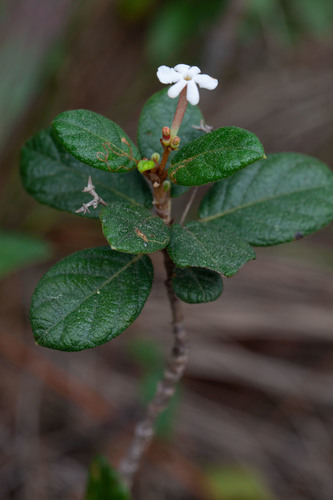
(c) Riley Fortier, some rights reserved (CC BY-NC)
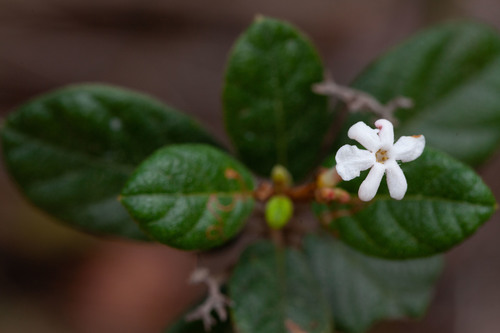
(c) Riley Fortier, some rights reserved (CC BY-NC)
What to Eat
Edible parts: Fruit
The red, velvety fruit are edible.
Known Hazards
Where to Find It
It is a tropical plant.
Bahamas, Bolivia, Caribbean, Central America, Colombia, Cuba, Dominican Republic, Hispaniola, Jamaica, North America, Puerto Rico, South America, St Lucia, Trinidad, USA, Venezuela, Virgin islands, West Indies,
How to Identify
A shrub or small tree. It can grow 3-10 m tall. The crown is open and spreading. The trunk is 10 cm across. The leaves are opposite. They are narrowly oval and 15 cm long. They are rough. The fruit are red and velvety.
How to Grow
It can be used as a hedge or living fence. It can be grown from cuttings.
Other Uses
The light brown wood is hard. It is used for stakes. The wood is used for fuel. The plant roots easily from cuttings and is used to make living fences.
Wikipedia
Source ↗Guettarda scabra, commonly known as the rough velvetseed, is a species of plant in the family Rubiaceae native to the Neotropics.
Notes
It is an at risk plant.
Names & Synonyms
Carapacho, Wild guave
References (4)
- Grandtner, M. M. & Chevrette, J., 2013, Dictionary of Trees, Volume 2: South America: Nomenclature, Taxonomy and Ecology. Academic Press p 283
- Kermath, B. M., et al, 2014, Food Plants in the Americas: A survey of the domesticated, cultivated and wild plants used for Human food in North, Central and South America and the Caribbean. On line draft. p 401
- Roa, J. A. G. & Boada, D. S. G., 2018, Fundación para el Fortalecimiento de la Fruticultura y Plantas Alimenticias no Convencionales en Colombia.
- Useful tropical plants tropical.the ferns.info


