Iryanthera laevis
Markgr.
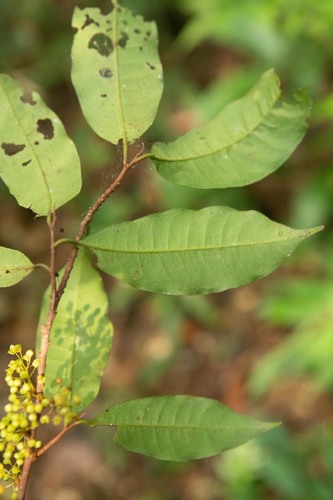
(c) Riley Fortier, some rights reserved (CC BY-NC), uploaded by Riley Fortier

(c) navasalfredo, some rights reserved (CC BY-NC)
What to Eat
Edible parts: Fruit - aril
The edible portion of the fruit is the aril — the fleshy layer surrounding the seeds — which is cooked and eaten. The fruit of Iryanthera laevis also contains dihydrochalcones (flavonolignoids).
Where to Find It
It is a tropical plant.
Amazon, Bolivia, Brazil, Colombia, Ecuador, Peru, South America, Venezuela,
How to Identify
Evergreen tree reaching 25 m tall with 15 m spread, growing at medium rate. Requires full sun. Tolerates light sandy, medium loamy, and heavy clay soils with good drainage. Grows across mildly acid to mildly alkaline pH ranges. Prefers consistently moist soil. Hardy to UK zone 10.
How to Grow
Management: Standard Staple Crop: Oil Wild-harvested and Sold. Climate: tropical. Humidity: humid. Carbon Farming Solutions - Cultivation: wild-harvested and sold. Management: standard (Describes the non-destructive management systems that are used in cultivation).
Propagation: Propagate by seed or cuttings.
Medicinal Uses
No medicinal uses are known for this plant.
Other Uses
No other uses are known for this plant.
Wikipedia
Evergreen tree reaching 25 m tall with 15 m spread, growing at medium rate. Requires full sun. Tolerates light sandy, medium loamy, and heavy clay soils with good drainage. Grows across mildly acid to mildly alkaline pH ranges. Prefers consistently moist soil. Hardy to UK zone 10.
Names & Synonyms
Cumala.
References (4)
- Grandtner, M. M. & Chevrette, J., 2013, Dictionary of Trees, Volume 2: South America: Nomenclature, Taxonomy and Ecology. Academic Press p 329
- Kermath, B. M., et al, 2014, Food Plants in the Americas: A survey of the domesticated, cultivated and wild plants used for Human food in North, Central and South America and the Caribbean. On line draft. p 451
- Lopez-Diago, D. & Garcia, N., 2021, Wild edible fruits of Colombia. Biota ColomBiana 22 (2) p 43
- Roa, J. A. G. & Boada, D. S. G., 2018, Fundación para el Fortalecimiento de la Fruticultura y Plantas Alimenticias no Convencionales en Colombia.


