Uniola virgata
(Poir.) Yates
Limestone grass, Wiregrass
PoaceaeSeeds/Nuts

iNaturalist · cc-by-nc
(c) Joey Santore, some rights reserved (CC BY-NC), uploaded by Joey Santore
(c) Joey Santore, some rights reserved (CC BY-NC), uploaded by Joey Santore
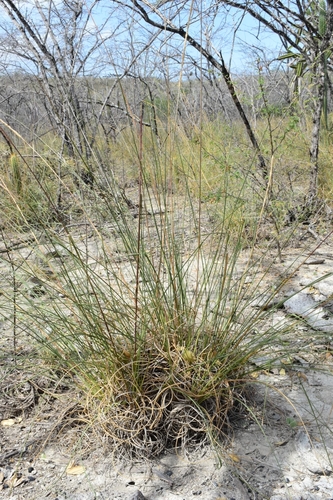
iNaturalist · cc-by-nc
(c) Joey Santore, some rights reserved (CC BY-NC), uploaded by Joey Santore
(c) Joey Santore, some rights reserved (CC BY-NC), uploaded by Joey Santore
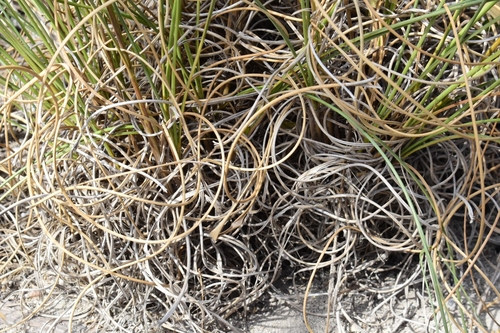
iNaturalist · cc-by-nc
(c) Joey Santore, some rights reserved (CC BY-NC), uploaded by Joey Santore
(c) Joey Santore, some rights reserved (CC BY-NC), uploaded by Joey Santore
What to Eat
Edible parts: Seeds
The seeds are cooked and eaten.
Where to Find It
It is a tropical plant.
Antilles, Caribbean, Dominican Republic, West Indies,
Countries: Antigua & Barbuda, Barbados, Bahamas, Cuba, Dominica, Dominican Republic, Grenada, Haiti, Jamaica, St Kitts & Nevis, St Lucia, Puerto Rico, Trinidad & Tobago, St Vincent
How to Identify
A tropical grass in the family Poaceae.
How to Grow
A plant of lowland tropical areas.
Other Uses
The fibres in the stems and leaves are used for making paper. The stems have been made into ropes.
Names & Synonyms
Espartillo, Yerba de alambre
Eleusine procera Spreng. ex Steud. [Invalid]Leptochloopsis virgata (Poir.) YatesPoa virgata Poir.Uniola racemiflora Trin.Uniola sparta Trin.
References (1)
- Kermath, B. M., et al, 2014, Food Plants in the Americas: A survey of the domesticated, cultivated and wild plants used for Human food in North, Central and South America and the Caribbean. On line draft. p 481 (As Leptochloopsis virgata)


