Otoba acuminata
(Standl.) A. H. Gentry
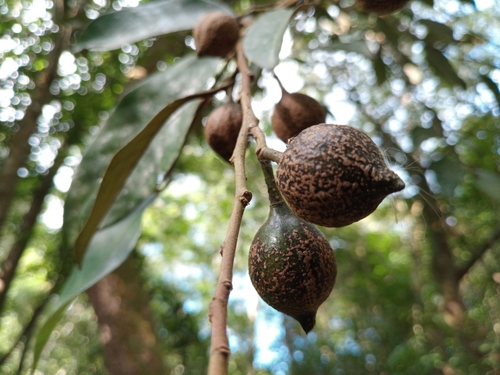
(c) edj_rivas, some rights reserved (CC BY-NC), uploaded by edj_rivas

GBIF
What to Eat
Edible parts: Fruit - aril
The aril, the fleshy layer surrounding the seeds, is eaten.
Where to Find It
It is a tropical plant.
Central America, Colombia, Costa Rica, Ecuador, Panama, South America*,
How to Identify
A tropical tree in the Myristicaceae family.
Other Uses
The wood is used for internal construction and to make plywood. We do not have any more information for this species, but a general description for the wood of this genus is as follows:- The heartwood is a pale, pinkish-brown; it is not demarcated from the sapwood. The texture is variable; the grain generally straight; lustre is medium to high; there is no distinctive odour or taste. The wood is light in weight and soft. The heartwood is non-durable and is susceptible to insect attack. The wood is prone to blue stain and requires rapid extraction and conversion. It generally machines well if sharp knives are used and dressed with the grain; it is easy to nail and glue; takes stain, paint, and clear finishes well. It is used for low-value purposes such as core stock, moldings, paneling, particleboard, general carpentry, and furniture components.
Wikipedia
Source ↗Otoba acuminata is a species of plant in the family Myristicaceae found in Costa Rica, Ecuador, and Panama. It is threatened by habitat loss.
Names & Synonyms
Cuangare, Kuankar
References (4)
- Kermath, B. M., et al, 2014, Food Plants in the Americas: A survey of the domesticated, cultivated and wild plants used for Human food in North, Central and South America and the Caribbean. On line draft. p 595
- Lopez-Diago, D. & Garcia, N., 2021, Wild edible fruits of Colombia. Biota ColomBiana 22 (2) p 44
- Roa, J. A. G. & Boada, D. S. G., 2018, Fundación para el Fortalecimiento de la Fruticultura y Plantas Alimenticias no Convencionales en Colombia.
- Torre, de la, L., et al, 2008, Enciclopedia de las Plantas Útiles del Ecuador. Herbario QCA. Pontificia Universidad Católica del Ecuador. p 459


