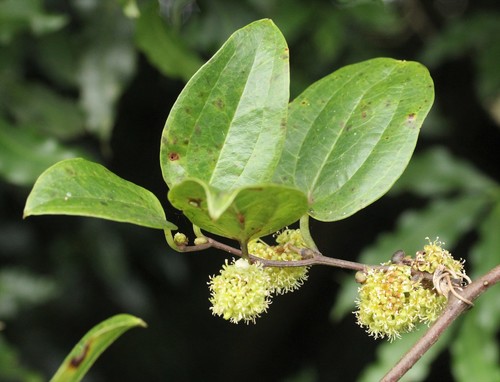
Smilax havanensis
Jacq.
Everglades greenbrier

(c) Aidan Campos, some rights reserved (CC BY-NC), uploaded by Aidan Campos
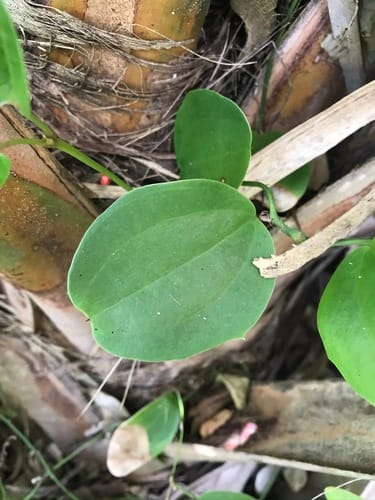
(c) George D. Gann, some rights reserved (CC BY-NC)
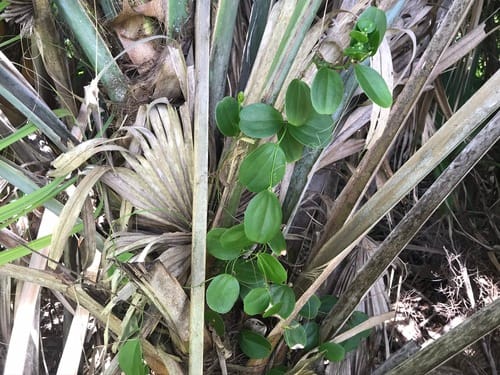
(c) George D. Gann, some rights reserved (CC BY-NC)
What to Eat
Edible parts: Shoots, Rhizomes, Fruit
The shoots, rhizomes, and fruit are edible. The roots are traditionally used to make a soda-like drink.
Where to Find It
It is a tropical plant.
Bahamas, Caribbean, Cuba, Dominican Republic, North America, USA, West Indies,
How to Identify
A vine. It has prickles. The flowers are small and green. The fruit are dark purple berries. They have a waxy coating.
Wikipedia
Source ↗Smilax havanensis, known as the everglades greenbrier, is a plant species native to Cuba, the Cayman Islands, Bahamas, Turks & Caicos, and southern Florida. Smilax havanensis is a perennial vine armed with prickles. Flowers are small and green, berries dark purple with a waxy coating. Aprostocetus smilax, an Eulophid wasp, induces galls on this species.
Names & Synonyms
Alambrillo, Sarsaparrilla
References (1)
- Kermath, B. M., et al, 2014, Food Plants in the Americas: A survey of the domesticated, cultivated and wild plants used for Human food in North, Central and South America and the Caribbean. On line draft. p 810