Tocoyena formosa
(Cham. & Schltdl.) K. Schum.
Blackberry-jam fruit
RubiaceaeFruit
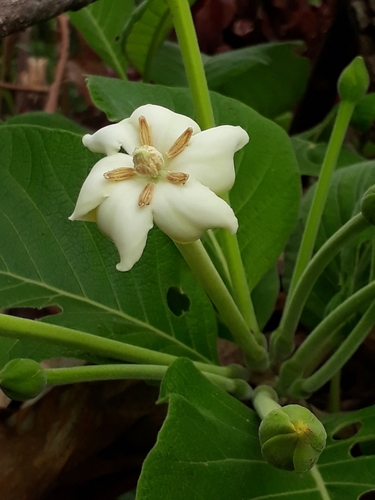
iNaturalist · cc-by-nc
(c) Ricardo Dislich, some rights reserved (CC BY-NC), uploaded by Ricardo Dislich
(c) Ricardo Dislich, some rights reserved (CC BY-NC), uploaded by Ricardo Dislich

iNaturalist · cc-by-nc
(c) rosindia, some rights reserved (CC BY-NC)
(c) rosindia, some rights reserved (CC BY-NC)
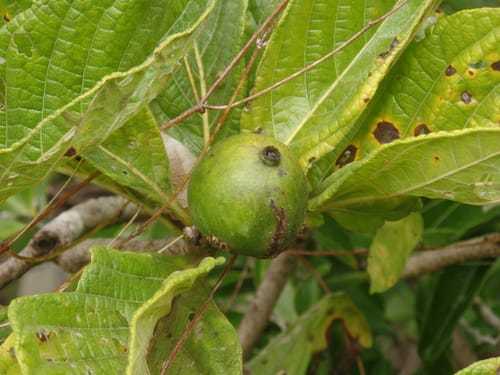
iNaturalist · cc-by-nc
(c) Frederico Acaz Sonntag, some rights reserved (CC BY-NC)
(c) Frederico Acaz Sonntag, some rights reserved (CC BY-NC)
What to Eat
Edible parts: Fruit
The fruit is eaten fresh and made into drinks.
Where to Find It
It is a tropical plant.
Bolivia, Brazil, Paraguay, South America,
How to Identify
A shrub. It has several stems. It grows 1.5-2.5 m tall. The fruit has a yellow skin and black pulp. They are 4.5 cm across.
Names & Synonyms
Estrela, Genipapo-do-campo, Guamaru, Janipapo, Jenipapo-de-cavalo
Gardenia formosa Cham. & SchltdlTocoyena microdon Mart.
and others
References (4)
- Kermath, B. M., et al, 2014, Food Plants in the Americas: A survey of the domesticated, cultivated and wild plants used for Human food in North, Central and South America and the Caribbean. On line draft. p 870
- Leticia, Z., et al, 2015, Do Socioeconomic characteristics explain the knowledge and use of native food plants in semiarid environments in Northeastern Brazil? Journal of Arid Environments 115:53-61
- Peres, M. K., 2011, Diasporos do Cerrado Atrativos para Fauna: Chave Interativa Caracterizacao Visual e Relacoes Ecologicas. Masters thesis. Universidade de Brasilia.
- www.colecionandofrutas.org


