Cassine glauca
(Rottb.) Kuntze
CelastraceaeFruit
iNaturalist · cc-by
(c) Siddarth Machado, some rights reserved (CC BY), uploaded by Siddarth Machado
(c) Siddarth Machado, some rights reserved (CC BY), uploaded by Siddarth Machado
iNaturalist · cc-by-nc
(c) Radha Veach, some rights reserved (CC BY-NC)
(c) Radha Veach, some rights reserved (CC BY-NC)
What to Eat
Edible parts: Fruit
The ripe fruit are eaten raw.
Where to Find It
It is a tropical plant. It grows in coastal scrub and monsoon forest.
Asia, India, Sri Lanka,
Countries: United Arab Emirates, Afghanistan, Armenia, Azerbaijan, Bangladesh, Bahrain, Brunei, Bhutan, China, Georgia, Indonesia, Israel, India, Iraq, Iran, Jordan, Japan, Kyrgyzstan, Cambodia, North Korea, South Korea, Kuwait, Kazakhstan, Laos, Lebanon, Sri Lanka, Myanmar, Mongolia, Maldives, Malaysia, Nepal, Oman, Philippines, Pakistan, Qatar, Saudi Arabia, Singapore, Syria, Thailand, Tajikistan, Timor-Leste, Turkmenistan, Turkey, Taiwan, Uzbekistan, Vietnam, Yemen
How to Identify
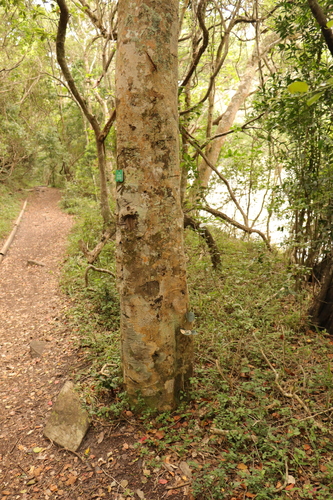
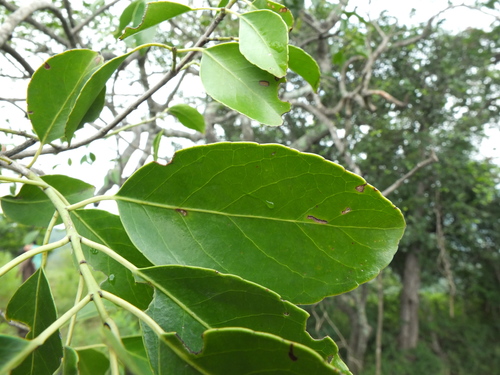
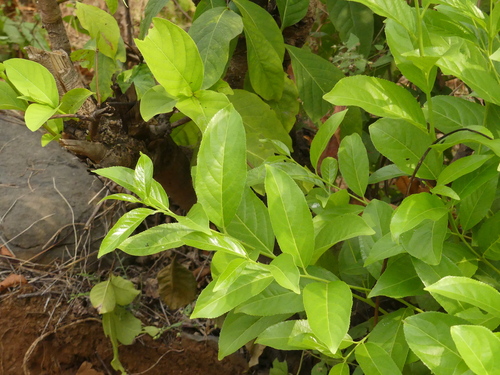
A large tree. The leaves are opposite and oblong. They taper to both ends and their are teeth along the edge. The flowers are pale yellow in groups in the axils of leaves. The fruit is oval and fleshy.
Wikipedia
Source ↗Cassine glauca, known as නෙරලු (neralu) in Sinhala, is a species of large tree in the staff vine family, Celastraceae. Its natural range extends through the Indo-Malayan region in subtropical mixed deciduous and evergreen forests.
Names & Synonyms
Kaguni, Mundi pazham, Neralu
Barringtonia sphaerocarpa C. A. GardnerCelastrus glaucus VahlElaeodendron glaucum (Rottb.) Pers.Mangifera glauca Rottb.and others
References (3)
- Kannan, M., et al, 2015, Ethnobotanical survey on wild edible plants of Kalrayan Hills, Salem District, Tamil Nadu, India. Global J. Res. Med Plants & Indigen. med. 4(12): 236-246
- Khayde, M. S., et al, 2009, Wild Edible Plants Used by the tribes of Akole Tahasil of Ahmednagar District (MS), India. Ethnobotanical Leaflets 13:1328-36
- Pradhan, R., et al, 2020, Potential Wild Edible Plants and its Significance in Livelihood of Indigenous People of Male Mahadeshwara Hills, Karnataka. Economic Affairs Vol. 64, No. 4 pp. 01-14