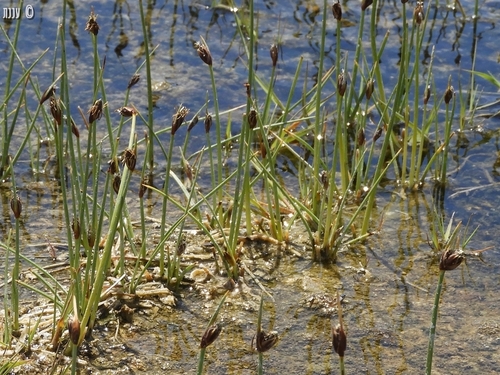
Cladium mariscus
(L.) Pohl.
Jamaica Swamp Sawgrass
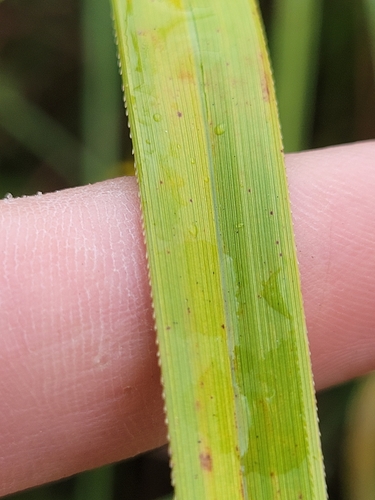
(c) Robert Langellier, some rights reserved (CC BY-NC)
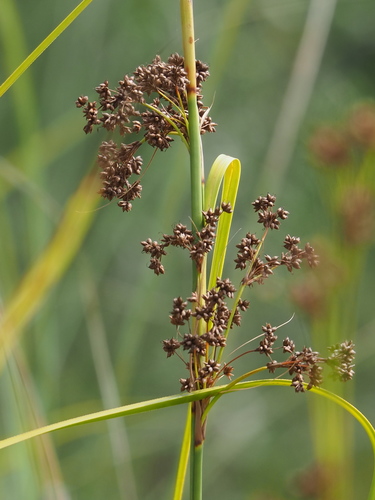
no rights reserved, uploaded by 葉子

(c) Marie Coleman, some rights reserved (CC BY-NC), uploaded by Marie Coleman
What to Eat
Edible parts: Leaves
The young shoots may be edible.
Where to Find It
It grows in temperate and tropical regions worldwide. It grows on the edges of lakes, swamps and pools.
Africa, Albania, Algeria, Angola, Arabia, Argentina, Asia, Australia, Austria, Bahamas, Belarus, Belgium, Bermuda, Bolivia, Botswana, Brazil, Britain, Bulgaria, Burundi, Cameroon, Canary Is., Caucasus, Central America, Central Asia, Chad, China, Colombia, Congo DR, Costa Rica, Crete, Cuba, Cyprus, Czech Republic, Denmark, Dominican Republic, East Timor, Egypt, Europe*, Finland, France, Germany, Greece, Guatemala, Haiti, Himalayas, Honduras, Hungary, India, Iran, Iraq, Ireland, Israel, Italy, Jamaica, Japan, Kazakhstan, Korea, Kyrgyzstan, Lebanon, Libya, Madagascar, Maldives, Mauritius, Mediterranean, Middle East, Morocco, Mozambique, Namibia, Nepal, Netherlands, New Caledonia, Nicaragua, Nigeria, North America, Norway, Oman, Pakistan, Palestine, Panama, Papua New Guinea, PNG, Paraguay, Peru, Poland, Portugal, Puerto Rico, Romania, Russia, Rwanda, Saudi Arabia, SE Asia, Senegal, Sicily, Solomon Islands, South Africa, Southern Africa, Sweden, Switzerland, Syria, Taiwan, Tajikistan, Tanzania, Tasmania, Tibet, Timor-Leste, Turkey, Türkiye, Turkmenistan, Uganda, Ukraine, Uruguay, USA, Uzbekistan, Vanuatu, Venezuela, Vietnam, West Indies, Zambia, Zimbabwe, Yugoslavia,
How to Identify
A sedge. These grow in clumps and have grass like leaves and solid stalks. It grows about 1 m tall. It is a herb. It has an underground stem or rhizome and leaves arranged in a spiral.
How to Grow
Propagation: Sow seed in a cold frame as soon as it is ripe, in a pot standing in 2cm of water. Once seedlings are large enough to handle, prick them out into individual pots and plant out during summer. The plant can also be propagated by division in spring.
Medicinal Uses
None known
Other Uses
The stems are used for thatching, and the roots have been used to make small baskets.
Wikipedia
Source ↗Cladium mariscus is a species of flowering plant in the sedge family known by the common names swamp sawgrass, great fen-sedge, saw-sedge or sawtooth sedge. Previously it was known as elk sedge. It is native of temperate Europe and Asia where it grows in base-rich boggy areas and lakesides. It can be up to 2.5 metres (8 ft 2 in) tall, and has leaves with hard serrated edges. In the past, it was an important material to build thatched roofs; harvesting it was an arduous task due to its sharp edges that can cause deep lacerations.
Notes
There are 3 Cladium species.
Names & Synonyms
Great Fen-sedge, Sedge, Swamp Saw-grass, Swamp Sawgrass
References (9)
- Ambasta, S.P. (Ed.), 2000, The Useful Plants of India. CSIR India. p 130
- Cowie, I, 2006, A Survey of Flora and vegetation of the proposed Jaco-Tutuala-Lore National Park. Timor-Lests (East Timor) www.territorystories.nt/gov.au p 46
- Dashorst, G.R.M., and Jessop, J.P., 1998, Plants of the Adelaide Plains & Hills. Botanic Gardens of Adelaide and State Herbarium. p 194
- Ekman Herbarium records Haiti
- Kew Plants of the World Online
- Plants for a Future database, The Field, Penpol, Lostwithiel, Cornwall, PL22 0NG, UK. http://www.scs.leeds.ac.uk/pfaf/
- Simpson, D. A. & Inglis, C. A., 2001, Cyperaceae of Economic, Ethnobotanical and Horticultural Importance: A checklist. Kew Bulletin Vol. 56, No. 2 (2001), pp. 257-360
- Tent. fl. bohem. 1:32. 1809
- World Checklist of Useful Plant Species 2020. Royal Botanic Gardens, Kew
More from Cyperaceae