Clematis paniculata
Thunb.
Panicled Clematis, Sweet Clematis

(c) Saryu Mae 前 朝琉, some rights reserved (CC BY), uploaded by Saryu Mae 前 朝琉
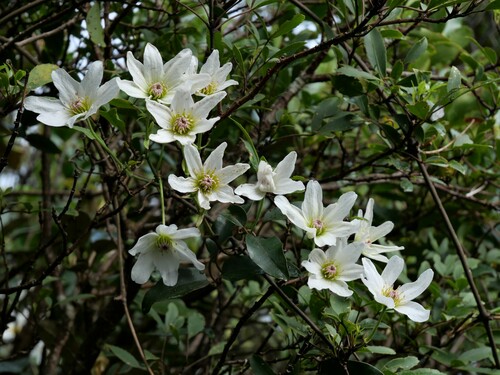
(c) Chris Close, some rights reserved (CC BY-NC)
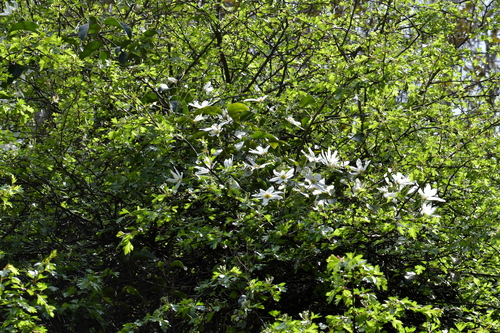
(c) Christopher Stephens, some rights reserved (CC BY-SA)
What to Eat
Edible parts: Leaves, Flowers
The leaves and flowers are eaten.
Known Hazards
Where to Find It
It is a temperate plant. It does best in rich, moist soils and in a protected sunny position. It is resistant to frost but sensitive to drought. It suits hardiness zones 7-10.
Asia, Australia, China, Indochina, New Zealand*, SE Asia, Tasmania, Thailand, Vietnam,
How to Identify
A climbing plant. It grows 5-9 m tall and spreads 3-9 m wide. It is evergreen. The stem is woody. The leaves are heart shaped and leathery. They are glossy green. Male and female flowers on on separate plants. The flowers are white and have a scent. They occur in large panicles. They are 10 cm across. The flowers have 4 petals. It is often seen growing through the tops of trees.
How to Grow
It can be grown by seed or from cuttings. Plants grown from seed have a juvenile leaf stage.
Wikipedia
Source ↗Clematis paniculata (Māori: puawānanga or puapua) is a species of flowering plant in the buttercup family Ranunculaceae. It is one of seven species of clematis native to New Zealand. C. paniculata is the most common of these, and is widespread in forests throughout the country. Growing from lowland areas up to low mountainous forests, it flowers between August and November. The Māori name puawānanga translates as "flower of the skies", and traditionally its flowering meant the start of spring. Puapua on the other hand comes from reduplication of the Polynesian term pua referring to either Fagraea berteroana, Guettarda speciosa or Gardenia taitensis.
Notes
There are about 250 Clematis species.
Names & Synonyms
Day ong lao pani, Phuang-kaeo-manii, Puawhananga
References (9)
- Bodkin, F., 1991, Encyclopedia Botanica. Cornstalk publishing, p 264
- Cundall, P., (ed.), 2004, Gardening Australia: flora: the gardener's bible. ABC Books. p 388
- Engel, D.H., & Phummai, S., 2000, A Field Guide to Tropical Plants of Asia. Timber Press. p 206
- Facciola, S., 1998, Cornucopia 2: a Source Book of Edible Plants. Kampong Publications, p 190
- Hibbert, M., 2002, The Aussie Plant Finder 2002, Florilegium. p 70 (As Clematis indivisa)
- Lord, E.E., & Willis, J.H., 1999, Shrubs and Trees for Australian gardens. Lothian. p 328
- Matthews, J., 1987, New Zealand Native Plants for your Garden. Pacific Publishers, p 28
- READ
- Trans. Linn. Soc. London 2:337. 1794 (non J. F. Gmel. 1791) - an illegitimate later homonym (ICBN Art. 53) that is unavailable for use


